
This article may contain affiliate links. We may earn a commission at no additional cost to you; this does not determine our editorial conclusions.
One of the biggest reasons well-written content fails to rank isn’t poor writing or a lack of keywords—it’s a mismatch between the content and what people are actually searching for.
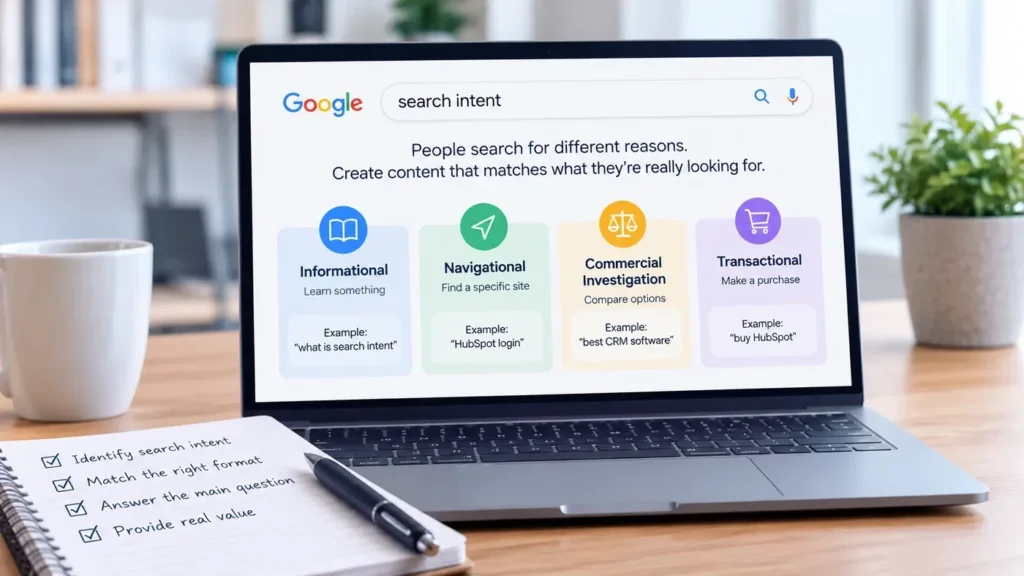
When someone types a query into Google, they have a specific goal in mind. They may want to learn something, compare products, visit a particular website, or make a purchase. Search engines work hard to understand that goal, known as search intent, and prioritize pages that satisfy it.
This means that even an informative, well-researched article can struggle if it doesn’t align with what users expect to find. A buying guide won’t perform well for a keyword where people want a step-by-step tutorial, just as a product page is unlikely to rank when searchers are looking for educational information.
Understanding search intent helps you create content that serves your audience first while improving your chances of ranking in both traditional search results and AI-powered search experiences. In this guide, you’ll learn how to identify search intent, avoid common mistakes, and create content that better matches what your audience is actually looking for.
Quick Takeaways
• Search intent explains why someone performs a search.
• Understanding intent is often more important than targeting a high-volume keyword.
• Study the pages already ranking before creating new content.
• Match both the format and depth that users expect.
• Review existing content regularly because search intent changes over time.
What Is Search Intent?
Search intent is the reason behind a user’s search query.
Someone searching for “how to write a blog post” is usually looking for educational information, while someone searching for “best project management software” is likely comparing different solutions before making a decision. Even though both users are interested in content, their expectations are completely different.
Google has become increasingly effective at identifying these expectations. Instead of simply matching keywords, it analyses which type of content consistently satisfies users for a particular search. That’s why the first page of search results often contains articles with a similar format, whether they’re tutorials, comparison guides, product pages, or videos.
Creating content that matches search intent isn’t about copying competitors. It’s about understanding what information readers expect and presenting it in a way that genuinely answers their questions.
Google’s guidance on creating helpful, reliable, people-first content reinforces this approach by encouraging publishers to create content that primarily serves readers rather than search engines.
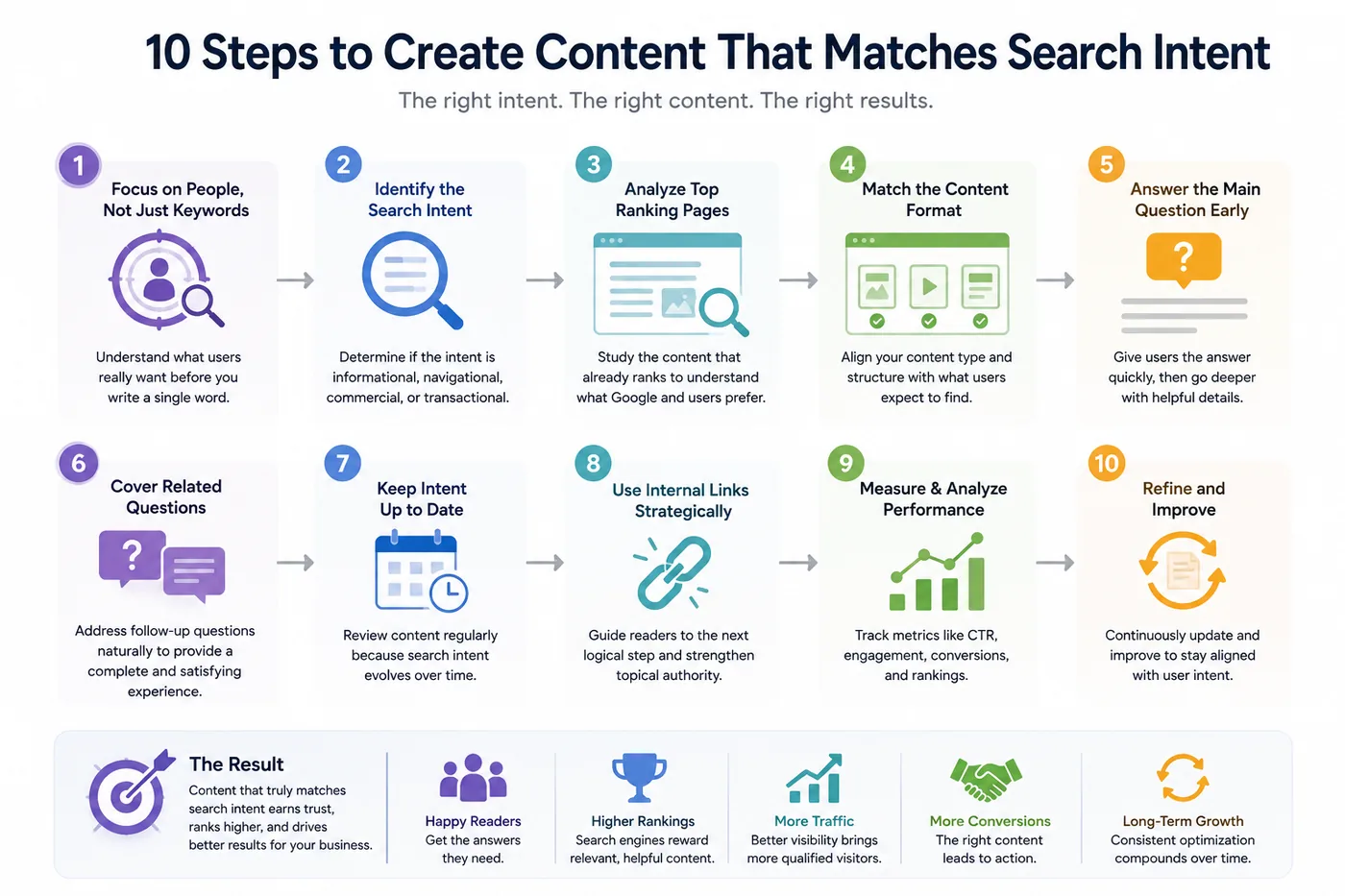
1. Stop Writing for Keywords Instead of People
Common Mistake
Many content creators begin with a keyword research tool, find a phrase with high search volume, and immediately start writing. While keyword research is important, focusing only on the keyword often leads to content that misses the real purpose behind the search.
For example, someone searching for “email marketing software” may not want a general explanation of email marketing. They may be looking for product comparisons, pricing information, or reviews to help them choose a platform. If your article only explains what email marketing is, it probably won’t satisfy their needs, even if you’ve used the keyword throughout the page.
This is one reason articles sometimes receive impressions in Google Search Console but very few clicks or struggle to move beyond the second or third page of search results.
How to Do It Right
Before writing anything, search your target keyword in Google and study the first page of results. Instead of focusing on individual competitors, look for patterns that reveal what users actually expect.
Ask yourself:
• Are most of the results educational guides or product pages?
• Do they compare multiple solutions or focus on a single product?
• Are they written for beginners or experienced users?
• Do they answer one specific question or cover the topic in depth?
The pages already ranking provide valuable clues about search intent. Use those insights to shape your article while adding your own expertise, examples, and perspective rather than simply following a list of keywords.
2. Understand the Four Types of Search Intent
Common Mistake
Another common mistake is assuming every search has the same purpose.
In reality, people search for information at different stages of their journey. Some are just beginning to learn about a topic, while others are comparing products or preparing to make a purchase. Treating every keyword the same often results in content that feels disconnected from what readers actually need.
For example, an article promoting software to someone who simply wants to understand a concept is unlikely to perform well. Likewise, a basic educational guide may disappoint someone searching for pricing or product recommendations.
How to Do It Right
Before outlining your article, identify the primary intent behind the keyword. Most searches fall into one of these four categories:
• Informational — The user wants to learn something, such as “what is search intent?”
• Navigational — The user is trying to find a specific website, brand, or page.
• Commercial Investigation — The user is comparing options before making a decision.
• Transactional — The user is ready to buy, subscribe, download, or complete another action.
Once you’ve identified the intent, build your content around what the reader hopes to accomplish. Matching the right intent is often more valuable than simply including the right keywords.
3. Study the Pages Already Ranking Before You Write
Common Mistake
Some writers avoid looking at competing articles because they worry about copying them. Others only glance at the titles before beginning their own content.
Both approaches miss an important opportunity.
The pages already ranking reveal what Google has learned about user expectations. Ignoring those signals increases the risk of creating content that doesn’t align with search intent, regardless of how well it’s written.
How to Do It Right
Instead of analysing competitors to copy them, study them to understand the search landscape.
Pay attention to:
• The type of content ranking on the first page.
• How deeply each topic is covered.
• The questions each article answers.
• The overall structure and flow.
• The use of comparison tables, examples, FAQs, screenshots, or step-by-step instructions.
Your goal isn’t to create a similar article. It’s to create a more useful one by identifying gaps, adding original insights, and presenting information in a clearer and more helpful way.
4. Match the Content Format to the Search Intent
Common Mistake
Many writers assume that once they’ve identified the right keyword, any well-written article has a chance of ranking.
In reality, search intent also determines the format users expect to see. A keyword may consistently return comparison articles, product reviews, videos, or step-by-step tutorials. Publishing a different format doesn’t necessarily make the content bad—it simply means it may not align with what most searchers are looking for.
For example, someone searching for “best CRM software” is usually looking for a comparison or list of recommendations. Writing a general article explaining what CRM software is probably won’t satisfy that intent. Likewise, users searching for “how to improve SEO” generally expect a practical guide rather than a product page.
How to Do It Right
Before outlining your article, review the type of pages appearing on Google’s first page.
Ask yourself:
• Are the results mostly how-to guides?
• Are listicles dominating the search results?
• Do comparison articles appear most often?
• Are review pages ranking well?
• Are landing pages being prioritised?
• Do videos appear near the top of the results?
Once you’ve identified the dominant format, create content that matches what readers expect while adding more depth, clearer explanations, practical examples, and original insights. Matching the format doesn’t mean copying competitors—it means presenting information in the way users are already searching for.
5. Answer the Main Question Early
Common Mistake
Many articles spend several paragraphs introducing the topic before answering the question that brought the visitor to the page.
While background information has its place, readers often become frustrated when they have to scroll through lengthy introductions before finding the information they need. AI-powered search experiences also tend to favour content that provides clear, direct answers before expanding into additional detail.
How to Do It Right
Answer the primary question within the opening section of your article, then use the rest of the content to explain the topic in greater depth.
For example, if the article asks “What is search intent?”, begin with a concise definition before discussing why it matters, common mistakes, and practical examples. This approach improves the reader’s experience while making your content easier for search engines and AI systems to understand.
Well-structured articles also tend to perform better because readers quickly gain confidence that they’re in the right place and are more likely to continue reading.
6. Answer Related Questions Naturally
Common Mistake
Some articles focus so narrowly on a single keyword that they ignore the additional questions readers are likely to have.
This often results in content that feels incomplete. Visitors may return to Google to search for follow-up information, signalling that the original page didn’t fully satisfy their needs.
Search engines increasingly reward content that covers a topic comprehensively instead of answering only one isolated question.
How to Do It Right
Think beyond your primary keyword and consider what readers are likely to ask next. A guide about search intent, for example, should naturally explain why search intent matters, the different types of search intent, how to identify it, and how it affects SEO.
One effective way to uncover these opportunities is by reviewing Google’s People Also Ask section and related searches. These features often reveal common follow-up questions that can help you create more complete and useful content.
Building comprehensive articles also supports topical authority because it demonstrates expertise across related subjects instead of focusing on a single keyword.
7. Review Search Intent Regularly
Common Mistake
Many businesses assume search intent never changes.
In reality, search behaviour evolves over time. New products enter the market, user expectations shift, and Google updates the types of pages it believes best satisfy a particular query. An article that ranked well two years ago may no longer match what people expect today.
Ignoring these changes can gradually reduce rankings even if the information itself remains accurate.
How to Do It Right
Review your most important articles every few months and compare them with the current search results. Look for changes in article structure, the types of pages ranking, new questions being answered, or different formats appearing on the first page.
If search intent has evolved, update your content accordingly rather than simply adding more keywords. Regular reviews help keep your articles aligned with what users are actually searching for while maintaining their long-term performance.
Businesses that regularly improve their existing content often maintain stronger organic visibility because they continue adapting to changes in user behaviour instead of treating published articles as finished projects.
8. Use Internal Links to Support the Reader’s Journey
Common Mistake
Some websites treat internal linking as an SEO checklist rather than a way to help readers.
This often leads to random links being inserted wherever they fit, even when they don’t add value. In other cases, businesses publish excellent articles but never connect them, leaving readers with no clear path to explore related topics.
A disconnected content library makes it harder for search engines to understand the relationship between your pages. It also reduces the opportunity to demonstrate expertise across an entire subject.
How to Do It Right
Think about the next question a reader is likely to ask after finishing a section of your article. If another page on your website answers that question in greater detail, that’s usually a good place for an internal link.
For example, understanding search intent is only one part of a creating content that performs well. Developing a structured content strategy helps ensure every article supports a broader publishing goal rather than existing in isolation.
9. Measure Whether Your Content Matches Search Intent
Common Mistake
Many businesses judge success using rankings alone.
While rankings are important, they don’t tell the whole story. A page might rank well but receive very few clicks because the title doesn’t match user expectations. Another page might attract plenty of traffic but fail to generate enquiries because the content answers the wrong question.
Looking at only one metric can hide problems that affect overall performance.
How to Do It Right
Review several performance indicators together to understand whether your content is truly meeting user intent.
Pay attention to metrics such as:
• Organic traffic
• Click-through rate (CTR)
• Average search position
• Time spent on the page
• Conversions or enquiries
When these metrics improve together, it’s usually a strong sign that your content aligns with what users were hoping to find. If impressions continue increasing while engagement remains low, revisit the article and consider whether the search intent has shifted or whether the content needs to answer the reader’s question more directly.
10. Remember That Search Intent Evolves
Common Mistake
Many marketers optimise a page once and assume the work is complete.
However, search intent isn’t static. As industries evolve, new products emerge, and user behaviour changes, Google may begin favouring different types of content for the same keyword. An article that ranked well a year ago may gradually lose visibility because it no longer reflects what users expect to find.
Ignoring these changes often results in declining traffic, even when the information itself remains accurate.
How to Do It Right
Treat search intent as something that should be reviewed regularly rather than checked only during the initial writing process.
Periodically search your target keywords and compare your content with the current top-ranking pages. Look for changes in format, depth, examples, or the questions being answered. Small updates made over time are often enough to keep your content aligned with user expectations and maintain strong organic performance.
Businesses that consistently monitor and refine their content are generally better positioned to adapt as search behaviour changes, helping them remain visible in both traditional search results and AI-powered search experiences.
Frequently Asked Questions
What is search intent?
Search intent is the reason behind a user’s search query. It explains what someone hopes to achieve when they type a keyword into Google, whether that’s learning about a topic, comparing products, visiting a specific website, or making a purchase. Understanding that goal helps you create content that better matches what readers expect to find.
Why is search intent important for SEO?
Search engines aim to deliver the most relevant results for every search. If your content matches the user’s intent, it’s more likely to rank well because it satisfies what people are actually looking for. Even a well-written article may struggle if it answers the wrong question or uses a format that doesn’t align with user expectations.
How can I identify search intent?
The easiest approach is to search your target keyword and study the pages already ranking on the first page of Google. Look for patterns in the type of content, headings, questions answered, and overall format. These results usually provide strong clues about what users expect when searching for that keyword.
Can search intent change over time?
Yes. Search intent evolves as industries change, new products become available, and user behaviour shifts. A keyword that once favoured educational articles may later return comparison guides, product reviews, or videos. Reviewing important content regularly helps ensure it continues matching current search expectations.
Is search intent more important than keywords?
Both matter, but search intent should guide how you use keywords. Choosing the right keyword is only the first step. Your content also needs to answer the question behind that keyword in the format readers expect. Matching search intent often has a greater impact on rankings than simply repeating keywords throughout an article.
Does search intent matter for AI-powered search?
Absolutely. AI-powered search experiences aim to provide direct, relevant, and trustworthy answers. Content that clearly addresses user intent, answers common questions, and covers a topic comprehensively is more likely to be referenced by AI systems alongside traditional search engines.
Final Thoughts
Successful content isn’t created by targeting the highest-volume keywords alone. It succeeds because it understands why people are searching in the first place.
When your content matches search intent, readers find the answers they need more quickly, spend more time engaging with your website, and are more likely to take the next step—whether that’s exploring another article, subscribing to your newsletter, or becoming a customer.
Search intent should influence every stage of the content creation process, from choosing keywords and planning your outline to updating older articles as search behaviour evolves. By focusing on the questions your audience is trying to answer rather than simply the words they type into Google, you’ll create content that remains valuable to readers while building stronger visibility in both traditional search results and AI-powered search experiences.
TOOLS MENTIONED
Explore related tool profiles


We research and organize marketing software around practical use cases. Product claims are included only when supported by available sources.
Read our editorial policy →Related guides

5 Best Competitor Analysis Tools for Content Marketers in 2026
Compare 5 competitor analysis tools for content marketers to uncover keyword gaps, backlinks, top pages, and new content opportunities.
Content Marketing Strategy eBook Template Guide
The short answer: pick the eBook template based on the job it needs to do. If your goal is leads, use a short layout with clear CTA blocks. If your goal is planning, use…

Best Shopify Apps for Content Marketers in 2026 (Top Picks Compared)
Creating content for a Shopify store is easier than turning that content into traffic and sales. The best Shopify apps for content marketers help optimize blog posts for search engines, automate email marketing, showcase…