

This article may contain affiliate links. We may earn a commission at no additional cost to you; this does not determine our editorial conclusions.
Ranking for individual keywords is no longer enough to build sustainable organic traffic. Search engines have become much better at understanding whether a website consistently demonstrates expertise across an entire subject rather than simply publishing isolated articles targeting different keywords.
This broader level of expertise is commonly referred to as topical authority. Instead of asking whether a single page deserves to rank, search engines increasingly evaluate whether your website provides comprehensive, trustworthy, and helpful coverage of a topic.
For businesses, topical authority isn’t about publishing hundreds of articles. It’s about creating connected, high-quality content that answers the questions your audience is most likely to ask throughout their journey. The result is often stronger rankings, increased organic visibility, and greater trust from both readers and AI-powered search experiences.
In this guide, you’ll learn what topical authority is, why it matters for both SEO and Answer Engine Optimization (AEO), and the practical steps you can take to build it over time.
Quick Takeaways
• Topical authority is built by covering a subject comprehensively, not by targeting isolated keywords.
• High-quality content clusters often outperform large collections of unrelated articles.
• Internal linking helps search engines understand how your content connects.
• Regularly updating existing content strengthens your authority over time.
• Building topical authority is a long-term strategy rather than a quick SEO tactic.
What Is Topical Authority?
Topical authority is the level of expertise your website demonstrates on a specific subject.
Instead of evaluating one article in isolation, search engines look at the overall depth and quality of your content. If your website consistently publishes accurate, well-structured information that answers related questions, it becomes easier for search engines to understand what your site specialises in.
For example, a website with dozens of comprehensive articles covering content strategy, SEO writing, content optimisation, internal linking, and website performance is more likely to be recognised as an authority on content marketing than a website with only a few unrelated blog posts.
This doesn’t mean publishing every article imaginable. Quality, relevance, and how your articles connect are far more important than simply increasing the number of pages.
A well-planned content strategy makes this much easier because it encourages businesses to build related topics around clear goals instead of publishing articles based solely on individual keywords.
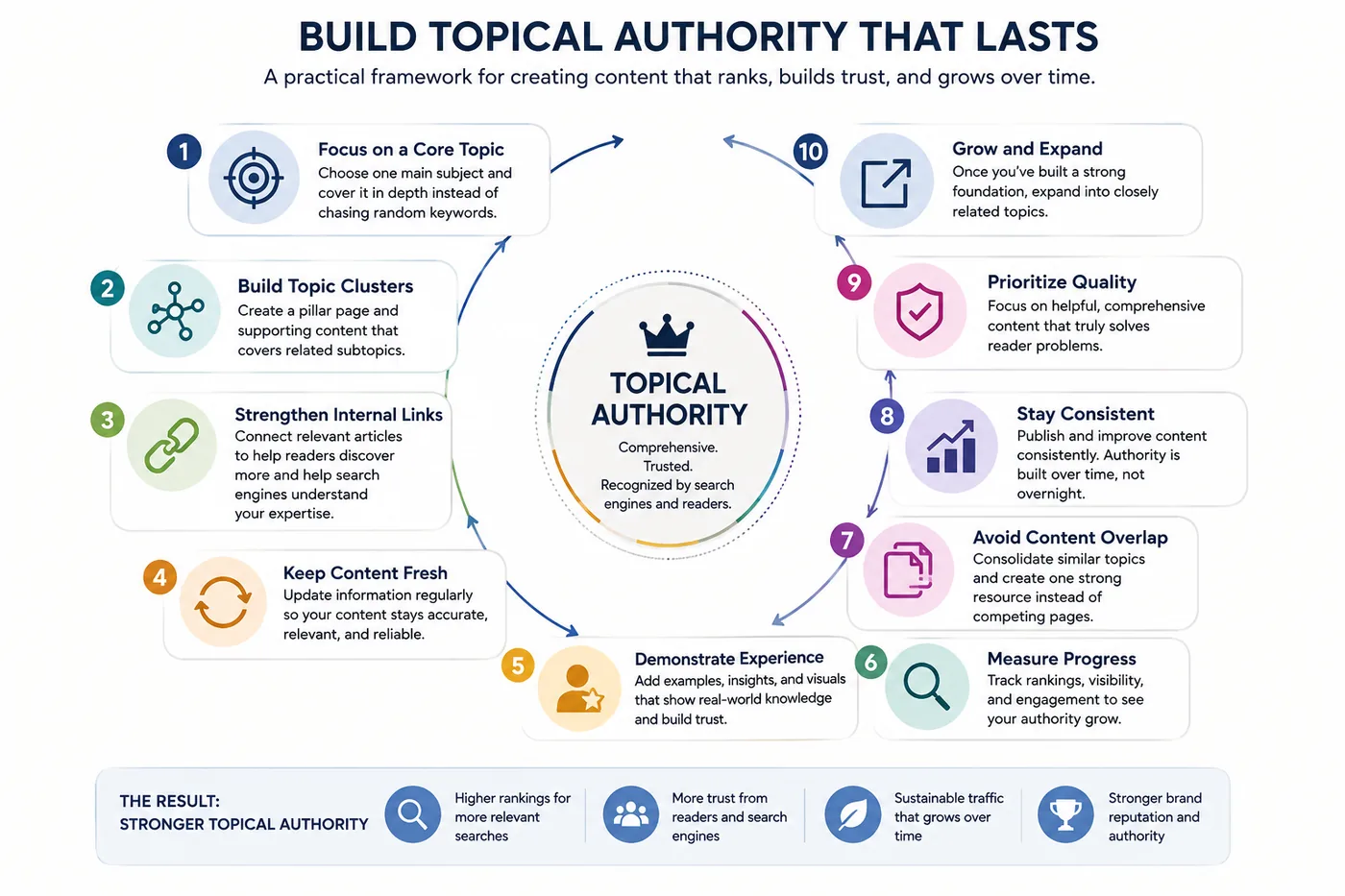
1. Cover Topics Instead of Individual Keywords
Common Mistake
Many businesses build their content strategy around individual keywords instead of the broader subject they want to become known for.
A company might publish one article about email marketing, another about CRM software, then one about AI, followed by a post about social media. While each article may target a different keyword, they don’t reinforce one another. As a result, search engines see a collection of unrelated content rather than a website with deep expertise in a specific area.
Publishing more articles doesn’t automatically increase authority. Without a clear topical focus, every new page has to establish credibility on its own instead of benefiting from the authority built by related content.
How to Do It Right
Choose one core topic that closely matches your business and build supporting articles around it. If your primary subject is content marketing, your content could naturally expand into SEO writing, content planning, internal linking, content optimisation, website conversions, and content performance. Over time, these connected articles demonstrate expertise while helping readers explore related questions without leaving your website.
2. Build Topic Clusters Around Your Core Subject
Common Mistake
Many websites publish excellent articles but treat every page as a separate project.
Without a logical structure connecting related content, readers often leave after viewing a single article, and search engines receive fewer signals about how different pages relate to one another.
This makes it more difficult to establish expertise because valuable content remains isolated instead of contributing to a broader knowledge base.
How to Do It Right
Create one comprehensive article that introduces a major topic, then support it with several detailed articles covering individual aspects of that subject. Link those pages naturally where they provide additional context or answer the reader’s next question. This creates a content cluster that benefits both readers and search engines.
3. Focus on Publishing Helpful Content, Not More Content
Common Mistake
A common misconception is that publishing more articles automatically leads to higher rankings.
Many businesses produce short articles targeting dozens of similar keywords, hoping that quantity alone will increase traffic. Unfortunately, thin or repetitive content often makes it harder to establish authority because it doesn’t provide enough value to stand out.
How to Do It Right
Instead of asking how many articles you can publish each month, ask whether each article is genuinely the best resource on that topic. Explain concepts clearly, answer related questions, include practical examples, and update important pages regularly. One comprehensive guide will often deliver more long-term value than several shorter articles covering similar ground.
4. Strengthen Your Internal Linking Strategy
Common Mistake
Many businesses only think about internal links after an article has been published. As a result, related content remains disconnected, making it harder for readers to discover additional resources and more difficult for search engines to understand how different pages relate to one another.
Some websites also make the opposite mistake by adding links wherever possible without considering whether they actually help the reader. Internal links should guide visitors naturally through a topic rather than interrupt the reading experience.
A well-connected website signals that your articles are part of a broader knowledge base instead of isolated pieces of content. This helps reinforce topical authority because every relevant page contributes to your expertise on the subject.
How to Do It Right
Review your existing articles and identify opportunities to connect related topics naturally. Instead of forcing links into every paragraph, add them where they genuinely provide additional context or answer the reader’s next question.
For example, when discussing comprehensive articles, it makes sense to reference SEO-friendly blog writing, as well-structured content helps both readers and search engines understand your expertise.
5. Keep Your Content Accurate and Up to Date
Common Mistake
Many businesses assume that once an article is published, the work is finished.
Over time, however, statistics become outdated, screenshots no longer match current software, industry recommendations change, and competitors publish more comprehensive resources. Even a well-written article can gradually lose rankings if it no longer reflects the latest information or search intent.
Allowing valuable content to become outdated weakens your topical authority because search engines want to recommend information that remains useful and reliable.
How to Do It Right
Treat your website as a living resource rather than a collection of finished articles. Review your most important pages regularly, update outdated information, improve weak sections, replace broken links, and add new insights where appropriate.
Businesses that consistently improve their existing content often strengthen their authority over time because every update makes the overall content library more useful.
Google’s Search Central documentation also encourages creating helpful, reliable, people-first content, reinforcing the importance of maintaining accurate and trustworthy information rather than publishing content solely to influence rankings.
6. Demonstrate Experience, Not Just Knowledge
Common Mistake
Many articles explain a topic accurately but never demonstrate real experience.
Readers can often tell the difference between content written from practical knowledge and content that simply repeats information found elsewhere. The same applies to AI-generated summaries that provide facts but lack examples, insights, or real-world context.
If every article sounds generic, it becomes much harder to build trust—even if the information is technically correct.
How to Do It Right
Support your content with practical examples, observations, comparisons, and real-world experience whenever possible. Explain not only what works but also why it works and when it may not.
Visuals can also strengthen your content by making complex ideas easier to understand. Diagrams, process illustrations, comparison tables, screenshots, and simple infographics often communicate information more effectively than long paragraphs alone. Choosing visuals that genuinely support the topic improves readability, helps readers retain information, and reinforces the expertise behind your content.
7. Focus on One Niche Before Expanding
Common Mistake
Many businesses try to write about every popular topic they can think of, hoping to attract more traffic from a wider range of searches.
While this approach may occasionally generate visits, it often weakens topical authority. A website that publishes articles about content marketing one week, cryptocurrency the next, followed by travel or health topics sends mixed signals about its area of expertise. Readers may also struggle to understand what the website specialises in, making it less likely they’ll return for future content.
Becoming known for one subject is usually far more valuable than covering dozens of unrelated topics.
How to Do It Right
Define the core topic your business wants to be recognised for, then build your content around that subject. Every new article should strengthen your expertise instead of taking your website in a completely different direction.
Expanding into closely related topics is perfectly natural, but each article should support your overall content strategy rather than compete for attention with unrelated subjects.
8. Measure Topical Authority Over Time
Common Mistake
Many businesses expect topical authority to improve after publishing only a handful of articles.
Unlike rankings for individual keywords, topical authority develops gradually. Search engines need time to understand the breadth of your content, evaluate its quality, and recognise how your articles connect with one another. Judging success too early often leads businesses to abandon a strategy that simply hasn’t had enough time to produce results.
How to Do It Right
Measure long-term progress instead of focusing on individual rankings. Look for gradual improvements in organic traffic, keyword visibility, impressions, click-through rates, and the number of related keywords your content begins ranking for. As your website grows, you should also notice that new articles are indexed more quickly and become easier to rank because they’re supported by an established content library.
9. Avoid Publishing Multiple Articles That Compete With Each Other
Common Mistake
It’s common for websites to publish several articles targeting nearly identical keywords without realising they’re competing against themselves.
For example, publishing separate articles titled “Content Marketing Tips,” “Best Content Marketing Advice,” and “Content Marketing Strategies” may create unnecessary overlap if they answer the same questions. Instead of strengthening your authority, similar pages can divide traffic and make it harder for search engines to determine which article should rank.
This issue, often called keyword cannibalisation, becomes more common as a website grows.
How to Do It Right
Review your existing content before creating a new article. If you already have a page covering the same search intent, consider updating or expanding it instead of publishing another version. A single comprehensive resource usually contributes more to topical authority than several shorter articles covering nearly identical topics.
This is also why regularly reviewing older content is an important part of maintaining a healthy content library. Improving existing pages often delivers stronger long-term results than continually creating overlapping content.
10. Build Authority Through Consistency
Common Mistake
Many businesses treat topical authority as a short-term SEO tactic instead of a long-term publishing strategy.
They may produce a series of articles over a few weeks and then stop publishing for months, or shift their focus to an entirely different subject before establishing meaningful expertise in their original niche.
Topical authority isn’t built by one outstanding article. It’s the result of consistently publishing useful, accurate, and connected content over time.
How to Do It Right
Think of every article as another piece of a larger knowledge base. Continue expanding important topics, refresh existing content when necessary, and keep improving the overall quality of your website. Over time, this consistent approach builds trust with both readers and search engines, making it easier for your future content to perform well organically.
A website that demonstrates expertise through consistently helpful content is far more likely to develop lasting topical authority than one that simply follows the latest keyword trends.
Frequently Asked Questions
What is topical authority in SEO?
Topical authority is the level of expertise your website demonstrates on a specific subject. Instead of evaluating a single article, search engines consider how well your entire collection of content covers a topic. Websites with comprehensive, accurate, and well-connected content are generally more likely to be viewed as trustworthy resources.
Does topical authority still matter with AI-powered search?
Yes. AI-powered search experiences are designed to provide reliable, well-supported answers. Websites that consistently publish accurate, in-depth content across a topic are more likely to be referenced because they demonstrate expertise rather than covering isolated keywords.
How many articles do I need to build topical authority?
There isn’t a specific number. A small collection of comprehensive, well-connected articles is usually more valuable than publishing dozens of thin or repetitive pages. Focus on answering your audience’s most important questions thoroughly before expanding into additional topics.
How long does it take to build topical authority?
Topical authority develops gradually. Depending on your competition, publishing frequency, and content quality, it may take several months before you notice meaningful improvements in organic visibility. Consistency is usually more important than speed.
Does updating old content improve topical authority?
Yes. Regularly updating existing content keeps your information accurate and relevant while strengthening your overall content library. Improving older articles can often deliver better long-term results than constantly publishing new content that overlaps with existing pages.
Can small businesses build topical authority?
Absolutely. Small businesses often have an advantage because they can focus on a specific niche instead of trying to compete across dozens of unrelated subjects. Building expertise around one area is generally more effective than publishing broad content on every trending topic.
Final Thoughts
Topical authority isn’t built by chasing every high-volume keyword or publishing as many articles as possible. It’s earned by consistently creating useful, trustworthy content that helps readers understand a subject from multiple angles.
The strongest websites don’t rely on one successful article. They build a connected library of resources that answers related questions, supports readers throughout their journey, and demonstrates genuine expertise over time.
If you’re looking to improve your organic visibility, start by identifying the subject your business wants to be known for. Then create comprehensive content around that topic, strengthen the connections between your articles, and continue refining your existing pages as your industry evolves. Over time, this approach builds a stronger foundation for both traditional SEO and Answer Engine Optimization, making it easier for search engines—and your audience—to recognise your website as a trusted source of information.

We research and organize marketing software around practical use cases. Product claims are included only when supported by available sources.
Read our editorial policy →Related guides
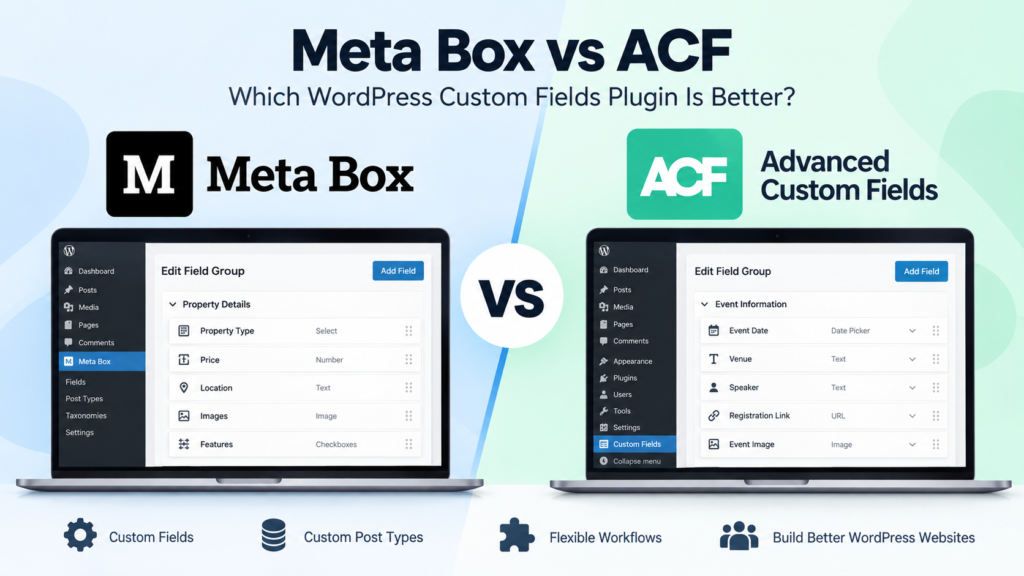
Meta Box vs ACF: Which WordPress Custom Fields Plugin Is Better in 2026?
Meta Box vs ACF is a common comparison when a WordPress website starts needing more flexibility than the standard post and page editor provides. Both plugins let you create custom fields, organize structured information, and build more dynamic WordPress websites without forcing everything into the main content editor. The differences become more important as the […]
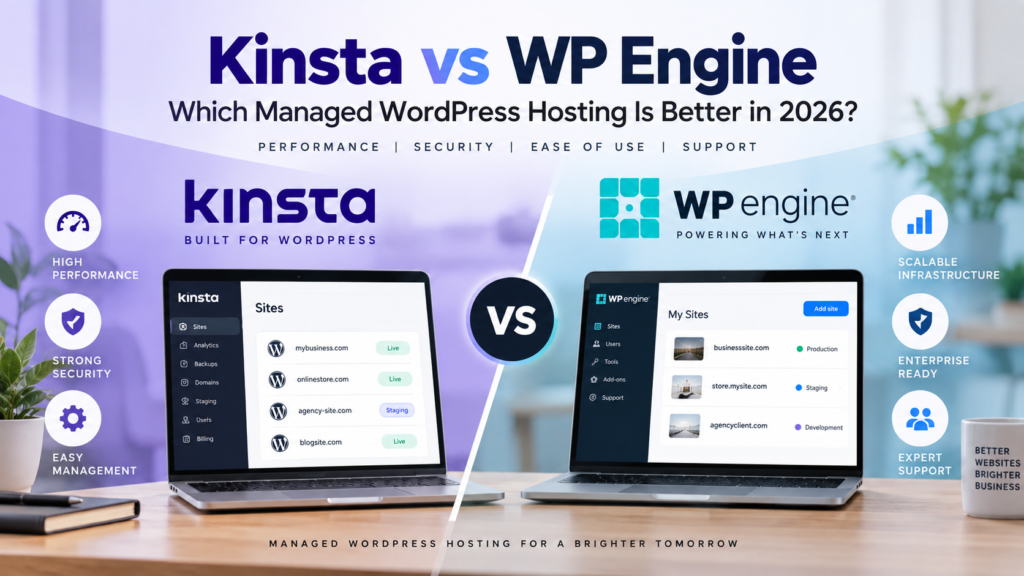
Kinsta vs WP Engine: Which Managed WordPress Hosting Is Better in 2026?
Kinsta vs WP Engine is a comparison you’re likely to come across when looking for managed WordPress hosting. Both take care of much of the technical work that comes with running WordPress, including performance optimization, security, backups, updates and staging environments. The difference is less about whether either platform can host a WordPress site and […]
Online Store Launch Checklist: From Product Idea to First Order
Prepare your first online store with a practical checklist for products, checkout, delivery, order testing and a focused customer-acquisition plan.