
This article may contain affiliate links. We may earn a commission at no additional cost to you; this does not determine our editorial conclusions.
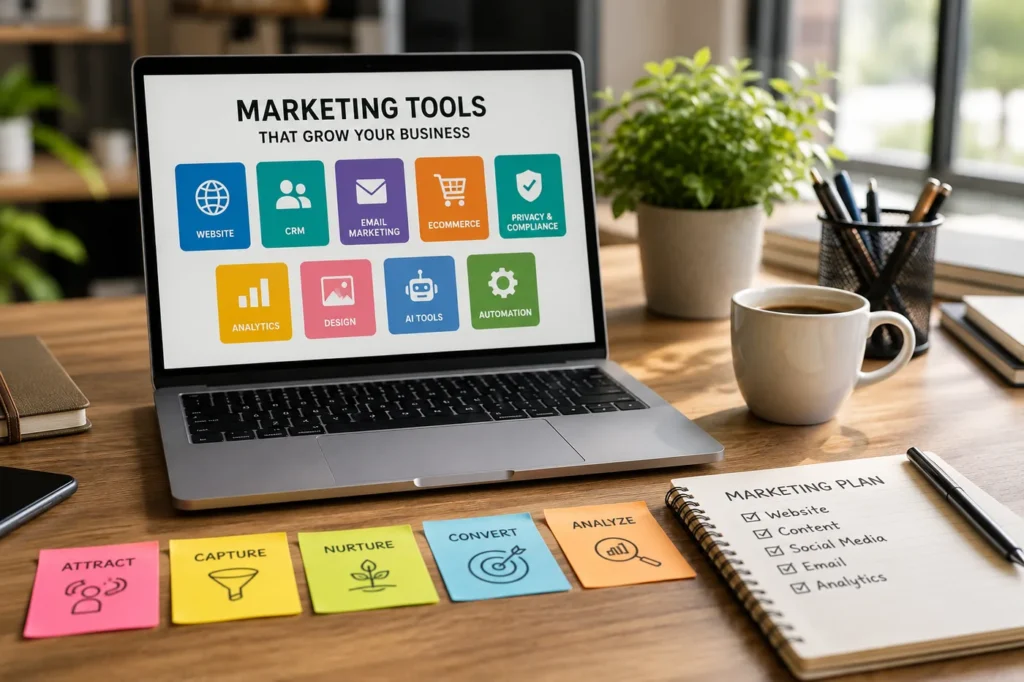
Small businesses often assume they need dozens of marketing tools to compete online. A CRM, email platform, website builder, analytics software, social media scheduler, design app, AI assistant—the list can quickly become overwhelming.
The reality is much simpler.
Most successful businesses don’t grow because they use more software. They grow because they choose a small set of tools that work well together and support their marketing goals.
Instead of chasing every new platform, build a practical marketing stack that helps you attract visitors, generate leads, nurture customers, and measure results.
Quick Takeaways
• Build your marketing stack around your business goals, not trends.
• Invest in a few tools that integrate well instead of managing dozens of disconnected apps.
• Prioritize tools that save time through automation.
• Review your marketing stack regularly and remove tools you no longer use.
• Start with the essentials and expand only when your business needs it.
1. A Website That You Control
Your website is the foundation of your digital marketing strategy. Unlike social media platforms, where algorithms can change overnight, your website is an asset you own.
It’s where potential customers learn about your business, read your content, subscribe to your newsletter, request a quote, or make a purchase.
When evaluating your website, focus on:
• Fast loading speeds
• Mobile responsiveness
• Clear navigation
• Helpful content
• Strong calls to action
• Secure hosting
You’ll also need a reliable domain registrar and hosting provider. Many small businesses choose providers such as Namecheap because they can manage domains, hosting, SSL certificates, and email services from a single account. The best choice, however, is the one that meets your budget, technical requirements, and growth plans.
Building a great website is only part of the equation. Without a clear content strategy, even the best-designed site can struggle to attract and convert visitors. Defining your audience, choosing the right topics, and publishing consistently all contribute to long-term success.
2. A CRM to Organize Customer Relationships
As your business grows, keeping customer information in spreadsheets becomes increasingly difficult.
A customer relationship management (CRM) platform stores contacts, tracks conversations, manages sales opportunities, and gives your team a complete view of every customer interaction.
Even businesses with a simple sales process benefit from having one central location for customer information. It improves follow-ups, reduces missed opportunities, and makes collaboration much easier.
Many small businesses choose HubSpot because it combines CRM, marketing, sales, and customer service tools within a single platform. If your business expects to grow, an all-in-one solution can reduce the need to connect multiple applications later.
Rather than choosing the platform with the longest feature list, look for one that’s easy for your team to adopt and supports your current processes.
3. An Email Marketing Platform
Email marketing continues to deliver one of the highest returns on investment because it allows you to communicate directly with people who have already shown interest in your business.
Whether you’re sending newsletters, educational content, product announcements, or automated follow-up emails, an email platform helps you build stronger customer relationships over time.
Look for features such as:
• Audience segmentation
• Marketing automation
• Personalization
• Landing pages
• Signup forms
• Campaign reporting
Before launching a campaign, it’s also worth checking the quality of your mailing list. Invalid or inactive email addresses can reduce deliverability and affect campaign performance. Many marketers use email verification services such as ZeroBounce to clean their lists before sending large campaigns, helping improve inbox placement without changing their existing email marketing platform.
Email marketing performs best when subscribers receive genuinely useful content instead of constant promotions. Publishing educational articles on a regular basis gives you valuable resources to share in newsletters while encouraging readers to return to your website.
4. An Ecommerce Platform (If You Sell Online)
If your business sells physical or digital products, an ecommerce platform is one of the most important investments you’ll make. It should do more than process payments—it should make it easy to manage products, orders, customers, and marketing campaigns from one place.
When comparing ecommerce platforms, consider factors such as:
• Ease of use
• Payment gateway support
• Mobile responsiveness
• SEO capabilities
• App integrations
• Inventory management
• Scalability
Shopify is one of the most widely used ecommerce platforms because it enables businesses to launch and manage online stores without extensive technical knowledge. Its ecosystem of themes, apps, and integrations also makes it suitable for businesses that expect to grow over time.
The best platform ultimately depends on your products, budget, and long-term business goals, so focus on choosing one that supports your workflow rather than simply offering the most features.
5. A Consent Management Solution
Privacy regulations continue to evolve, making it important for businesses to manage website consent responsibly.
A consent management platform helps visitors control how cookies and tracking technologies are used while helping website owners comply with regulations such as GDPR and similar privacy laws.
Look for features including:
• Customizable cookie banners
• Consent logging
• Automatic cookie scanning
• Support for Consent Mode
• Easy integration with your website
Solutions like Cookiebot can simplify consent management by automatically scanning websites for cookies and allowing visitors to manage their preferences through configurable consent banners. For businesses that rely on analytics and digital advertising, using a dedicated consent management solution can make ongoing compliance much easier.
6. Analytics and Reporting Tools
You can’t improve what you don’t measure.
Analytics tools help you understand how visitors discover your website, which pages perform best, and where potential customers leave before converting.
Instead of tracking dozens of reports, start with metrics that directly support your business objectives, including:
• Website traffic
• Traffic sources
• Engagement time
• Lead generation
• Conversion rates
• Email sign-ups
• Sales or enquiries
Reviewing these metrics regularly allows you to identify successful content, improve underperforming pages, and make more informed marketing decisions.
7. Design and Visual Content Tools
Good content isn’t only about writing. Visual elements help explain ideas, improve readability, and capture attention across websites and social media.
Even simple graphics can make articles easier to understand and more engaging.
Useful visual assets include:
• Featured images
• Custom illustrations
• Infographics
• Social media graphics
• Presentation slides
• Process diagrams
If you regularly create original visuals, AI-powered design tools such as OpenArt can help generate concept artwork and illustrations that can then be refined to match your brand. Used appropriately, these tools can reduce production time while supporting your creative workflow rather than replacing it.
8. AI Productivity Tools
Artificial intelligence has become a valuable assistant for many marketing teams, but it works best when combined with human expertise.
Rather than relying on AI to produce finished content, use it to speed up repetitive tasks such as:
• Brainstorming content ideas
• Creating outlines
• Summarising research
• Improving readability
• Drafting social media captions
Human review remains essential to ensure content is accurate, relevant, and aligned with your brand voice.
How to Choose the Right Marketing Stack
With so many options available, it’s easy to feel pressure to adopt every new marketing tool.
Instead, ask yourself a few practical questions before investing:
• Does this tool solve a real business problem?
• Will my team actually use it?
• Can it integrate with my existing systems?
• Will it save time or improve results?
• Can it scale as the business grows?
A smaller, well-integrated marketing stack is usually more effective than managing multiple disconnected platforms that duplicate the same functions.
Frequently Asked Questions
What marketing tools should a small business have first?
Start with the essentials: a website, a CRM, an email marketing platform, and analytics tools. As your business grows, you can add ecommerce, consent management, design, or AI tools based on your needs.
Is free marketing software good enough?
Many free tools offer enough functionality for startups and small businesses. Upgrade only when your business requires additional automation, integrations, or reporting capabilities.
Should I use separate tools or an all-in-one platform?
That depends on your workflow. Some businesses prefer specialised tools, while others benefit from all-in-one platforms that reduce the need for multiple integrations.
How often should I review my marketing tools?
Review your marketing stack at least once a year. Remove tools you no longer use, replace those that no longer meet your needs, and identify opportunities to simplify your workflow.
Do I need AI tools for marketing?
AI tools can improve efficiency by helping with research, ideation, and drafting, but they work best alongside human expertise rather than replacing it.
Final Thoughts
Building an effective marketing stack isn’t about using the most software—it’s about choosing the right tools for your business.
Start with the fundamentals, invest in platforms that support your goals, and avoid adding tools simply because they’re popular. As your business grows, your marketing stack should evolve with it, helping you work more efficiently while delivering a better experience for your customers.
When each tool has a clear purpose and fits into your overall marketing strategy, you’ll spend less time managing software and more time growing your business.

We research and organize marketing software around practical use cases. Product claims are included only when supported by available sources.
Read our editorial policy →Related guides
Content Marketing Tools: How to Build the Right Software Stack
Build a practical content marketing software stack for planning, writing, design, distribution and measurement without paying for overlapping tools.
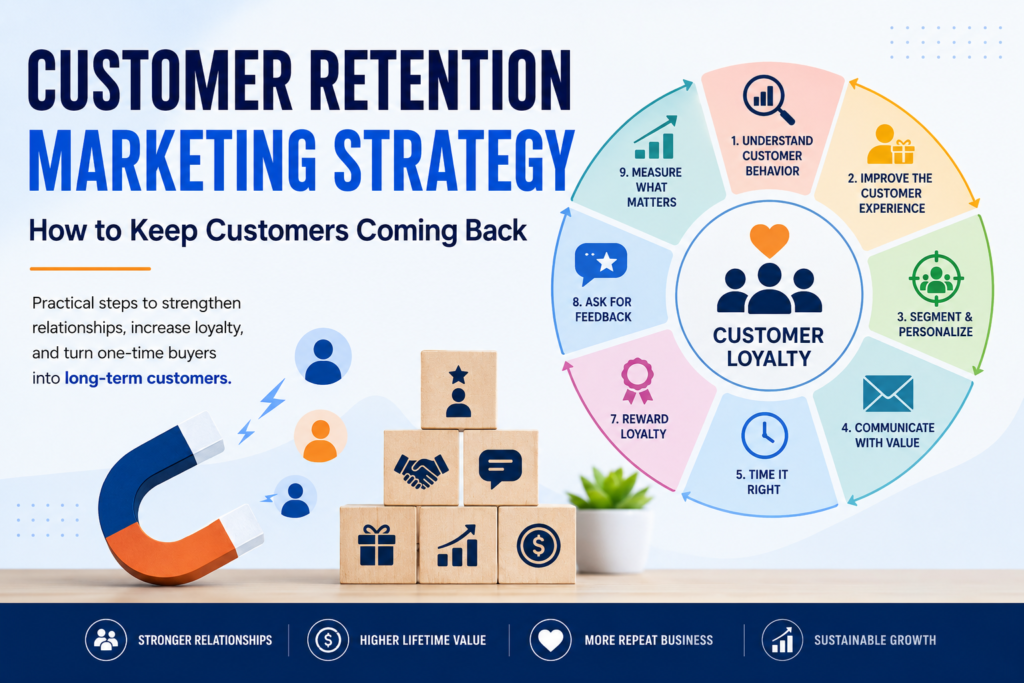
Customer Retention Marketing Strategy: How to Keep Customers Coming Back
Winning a new customer is important, but the relationship shouldn’t end as soon as the first purchase is complete. If customers buy once and then disappear, the business has to keep replacing them with new customers just to maintain the same level of sales. A customer retention marketing strategy focuses on what happens after that […]
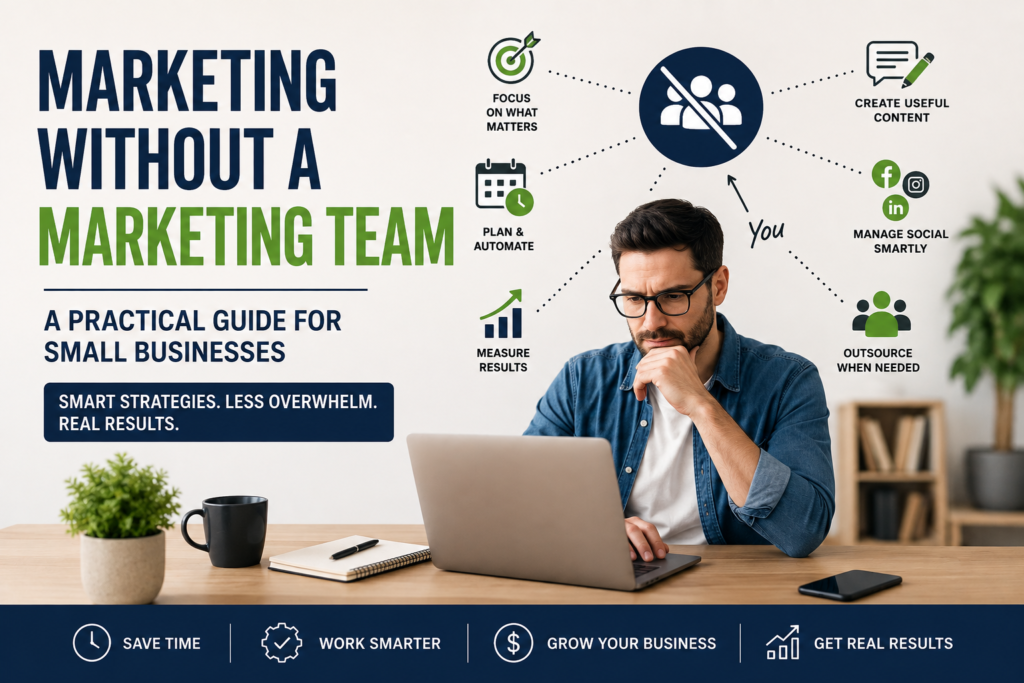
Marketing Without a Marketing Team: A Practical Guide for Small Businesses
Running a business already means handling more jobs than you probably expected. Marketing is often one of them. You know you need to attract customers, stay visible, keep in touch with existing customers, and give people a reason to choose you—but there may be nobody whose full-time job is making all of that happen. The […]