
This article may contain affiliate links. We may earn a commission at no additional cost to you; this does not determine our editorial conclusions.
Artificial intelligence has transformed content marketing. Tasks that once took hours—researching topics, drafting blog posts, writing social media captions, and creating email campaigns—can now be completed in minutes.
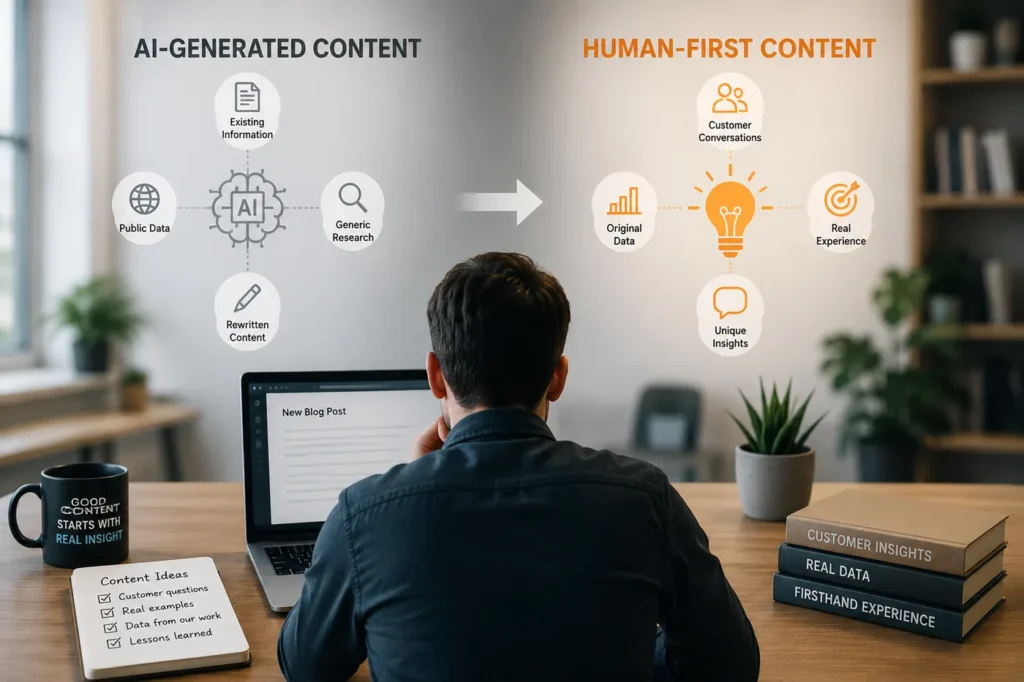
AI has made content easier to produce. At the same time, it’s made originality more valuable than ever.
When almost anyone can publish an AI-generated article, simply producing more content is no longer a competitive advantage. Readers are looking for original ideas, practical experience, and perspectives they can’t get from a chatbot.
The brands gaining attention in 2026 aren’t avoiding AI. They’re using it to work more efficiently while focusing on the one thing technology can’t replicate: genuine expertise.
What Is Human-First Content?
Human-first content is created to help people first and search engines second.
It answers real questions, solves practical problems, and offers insights based on experience rather than simply repeating information that’s already available online.
This approach doesn’t mean abandoning AI. Instead, it means using AI where it adds value—brainstorming ideas, organizing research, improving readability, or creating a first draft—while relying on people to provide context, judgment, and expertise.
If you’re still deciding which platforms fit your workflow, our guide to AI content tools compares popular solutions and explains where each one performs best.
Think of AI as a productivity tool, not a replacement for your voice.
Why Generic AI Content Is Losing Its Impact
When AI writing tools became widely available, they helped marketers create content faster than ever before. Today, nearly every business has access to similar technology, making it easier for competitors to publish articles on the same topics.
The result is an internet filled with content that often follows the same format and offers the same advice.
Readers notice the difference.
They can find basic information almost anywhere. What they’re looking for now is perspective—lessons learned from real projects, practical recommendations, and examples that show how something works in the real world.
Publishing another article that summarizes existing information is rarely enough to build trust or keep readers engaged.
Google has consistently encouraged creators to produce helpful, reliable, people-first content that demonstrates genuine expertise instead of writing solely to rank in search results (Google’s people-first content guidance).
Your Best Content Already Exists Inside Your Business
Many businesses assume they need completely new ideas for every article they publish.
In reality, some of the best content comes from work you’re already doing.
Customer conversations, support tickets, campaign results, product launches, and internal discussions all contain valuable insights that competitors don’t have.
Instead of simply explaining a topic, share what your team learned, what surprised you, and what you would do differently next time.
Those experiences give readers something they won’t find in a generic AI-generated article.
Once you’ve created original content, you can extend its value through content repurposing, turning one article into newsletters, social media posts, videos, and downloadable resources without constantly starting from scratch.
AI Should Improve Your Workflow, Not Replace Your Thinking
There’s no reason to avoid AI.
In fact, many successful marketing teams rely on it every day.
AI is excellent for organizing information, overcoming writer’s block, summarizing research, and improving the clarity of a draft.
Where people still make the biggest difference is in the decisions AI can’t make.
AI doesn’t understand your customers the way your sales or support teams do. It can’t explain why a campaign succeeded, why another failed, or how your business adapted to changing customer needs.
Those insights come from experience, and they’re often what readers find most valuable.
How to Create Content AI Can’t Easily Replicate
Every marketer now has access to AI.
That means your competitive advantage is no longer the tool—it’s the information you feed into it.
If your content starts with the same Google search, the same competitor analysis, and the same AI prompt as everyone else, don’t be surprised when the finished article sounds like everyone else’s.
The businesses creating the most valuable content in 2026 have changed their workflow. They don’t start with AI. They start with knowledge that only their organization has, then use AI to organize, refine, and improve that knowledge.
Start With Customer Conversations, Not Keywords
Keyword research tells you what people are searching for. Customer conversations tell you why they’re searching.
Instead of opening an SEO tool first, spend time with the people who interact with customers every day. Your sales team hears objections before anyone else. Customer support knows which questions appear repeatedly. Customer success teams understand where users struggle after onboarding, while marketers know which campaigns generate qualified leads.
Imagine your sales team hears this question several times in one week:
“We’re already using spreadsheets. Why should we switch to a CRM?”
That’s not just a question for your next sales call. It could become:
• A detailed comparison article
• A beginner’s guide
• A short explainer video
• A downloadable checklist
• A customer case study
• A webinar topic
One customer question can easily become an entire content campaign because it’s based on a real business problem instead of an assumption.
Tools like HubSpot CRM or Salesforce make it easy to review sales notes and identify common objections. If you’re looking for recurring support issues, platforms such as Zendesk or Intercom often reveal the questions customers ask every day. You can also gather fresh insights through simple surveys created with Google Forms or Typeform, especially after onboarding or a product launch.
Use Your Own Data Before Quoting Someone Else’s
Many marketers immediately search for industry statistics. While those can strengthen an article, your own data is often far more valuable because no one else has it.
Review your analytics, CRM, email platform, or marketing dashboard and look for patterns. Which campaigns generated the highest conversions? Which blog posts consistently attract qualified leads? Which email subject lines outperform the rest? Which landing page changes improved conversion rates?
Those answers often produce stronger content ideas than another hour of online research.
For example, instead of writing:
“Personalized subject lines improve email open rates.”
Write:
“After reviewing 12 email campaigns over three months, we found that including the customer’s industry in the subject line increased open rates by 18%.”
That’s an insight AI can’t invent because it comes directly from your own business.
Tools like Google Analytics 4, Google Search Console, HubSpot Marketing Hub, Microsoft Clarity, and Looker Studio can help uncover trends, user behavior, and campaign performance that are worth turning into original content.
Document Your Process, Not Just Your Results
Many articles explain what worked. Far fewer explain how the team arrived at that result.
That’s often the part readers care about most.
If your team redesigned a landing page or launched a new campaign, don’t stop at reporting the increase in conversions. Explain the problem you were trying to solve, why the original approach wasn’t working, what changes you tested, what surprised you, and what you would do differently next time.
Those details transform a simple case study into practical advice that readers can apply to their own business.
Whenever possible, include screenshots, timelines, or before-and-after examples. Visual evidence makes your content more credible and easier to understand.
Tools like Microsoft Clarity can help illustrate changes in user behavior, while Canva makes it easy to annotate screenshots and create simple process graphics. If you’re recording internal walkthroughs, Loom is an excellent way to capture demonstrations that can later be turned into blog posts or tutorials.
Build a Content Capture System
One of the biggest mistakes content teams make is waiting until it’s time to write before looking for ideas.
By then, most of the interesting conversations have already been forgotten.
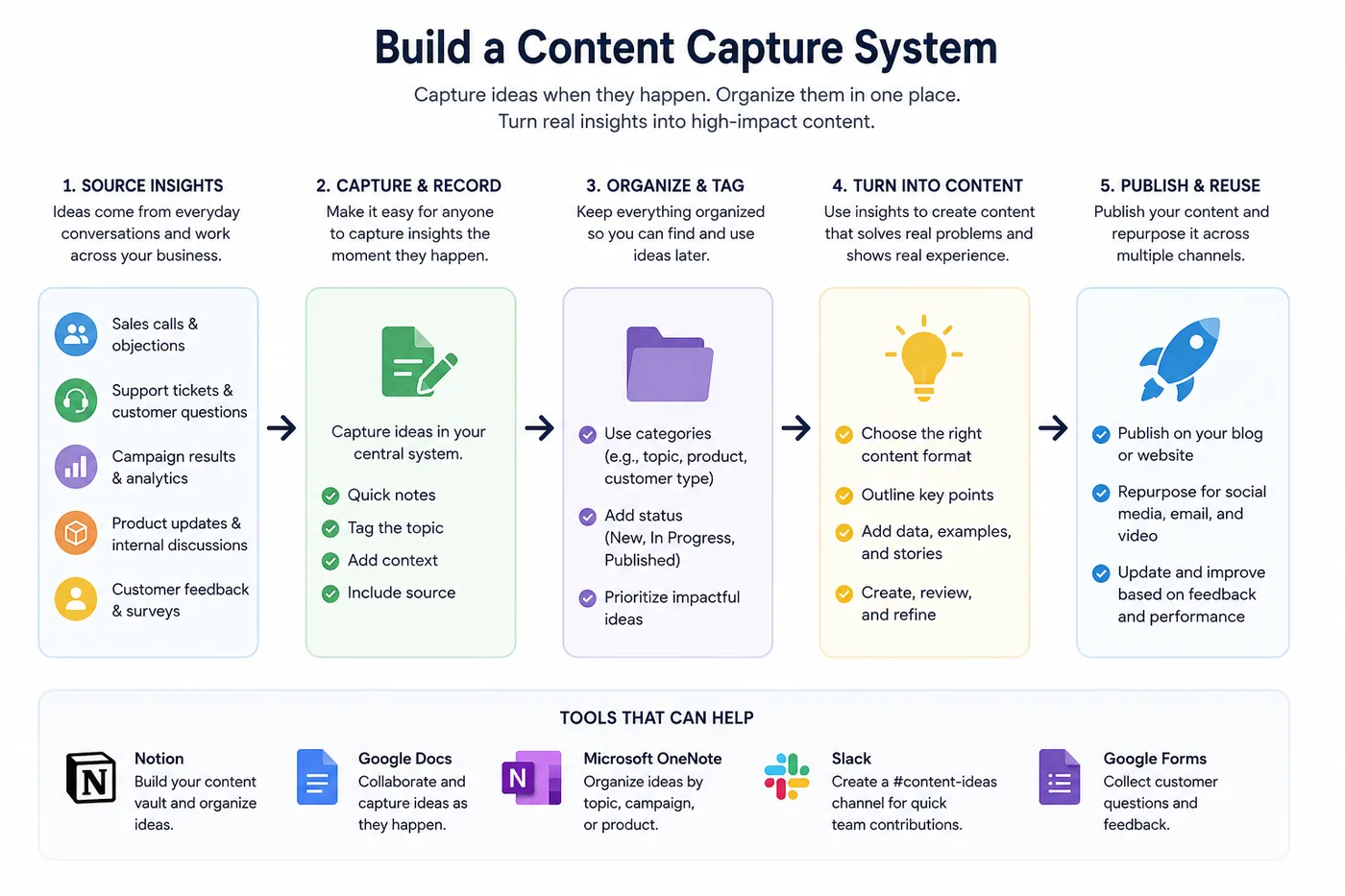
Every week your business generates valuable content opportunities. A salesperson answers a difficult question. Customer support discovers a recurring issue. Marketing identifies why a campaign exceeded expectations. Product teams explain why a new feature was built.
Instead of letting those insights disappear into Slack conversations, meeting notes, or email threads, create a central place where anyone in the company can save them.
It doesn’t have to be complicated.
A shared workspace in Notion, Google Docs, Microsoft OneNote, or even a dedicated #content-ideas channel in Slack is enough. Over time, you’ll build a content vault filled with customer questions, campaign insights, product updates, and lessons learned.
When it’s time to plan your editorial calendar, you won’t be staring at a blank page or asking AI what to write about. You’ll already have a library of original ideas waiting.
Let AI Improve the Writing, Not Replace the Expertise
This is where AI delivers the greatest value.
By the time AI enters your workflow, the expertise should already exist.
Use AI to organize ideas, create an outline, improve readability, rewrite awkward sentences, suggest stronger headlines, repurpose articles for social media, or proofread the final draft.
Think of AI as an editor rather than the author.
If you feed AI generic information, you’ll get generic content. If you feed it customer insights, original research, campaign data, and real experiences, the finished article becomes something competitors can’t easily reproduce.
Tools like ChatGPT and Claude are excellent for brainstorming, outlining, and refining long-form articles. Perplexity can help you verify recent information and discover supporting sources, while Grammarly provides a final review for clarity and consistency.
One Question Before You Click Publish
Before publishing any AI-assisted article, ask yourself one question:
Would someone learn something from this article that they couldn’t get by asking an AI assistant?
If the answer is no, don’t throw the article away—make it better.
Add a customer story. Share original data. Explain a lesson from a failed campaign. Include an opinion backed by experience or show readers the process behind your results.
Those additions are what transform an article from something AI could generate into something only your business could publish.
That’s how you create content AI can’t easily replicate.
Final Thoughts
The real impact of AI isn’t that it can write articles.
It’s that it has changed what makes an article worth reading.
When everyone has access to the same technology, publishing more content is no longer enough. The brands that will earn attention are the ones that offer something AI can’t generate on its own: original thinking, real-world experience, honest opinions, and insights shaped by working with actual customers.
In the years ahead, the winners won’t be the companies with the fastest publishing schedule or the longest list of AI prompts. They’ll be the businesses that treat AI as a tool rather than a substitute for expertise.
And in a world flooded with AI-generated information, trust may become the most valuable marketing asset of all.

We research and organize marketing software around practical use cases. Product claims are included only when supported by available sources.
Read our editorial policy →Related guides
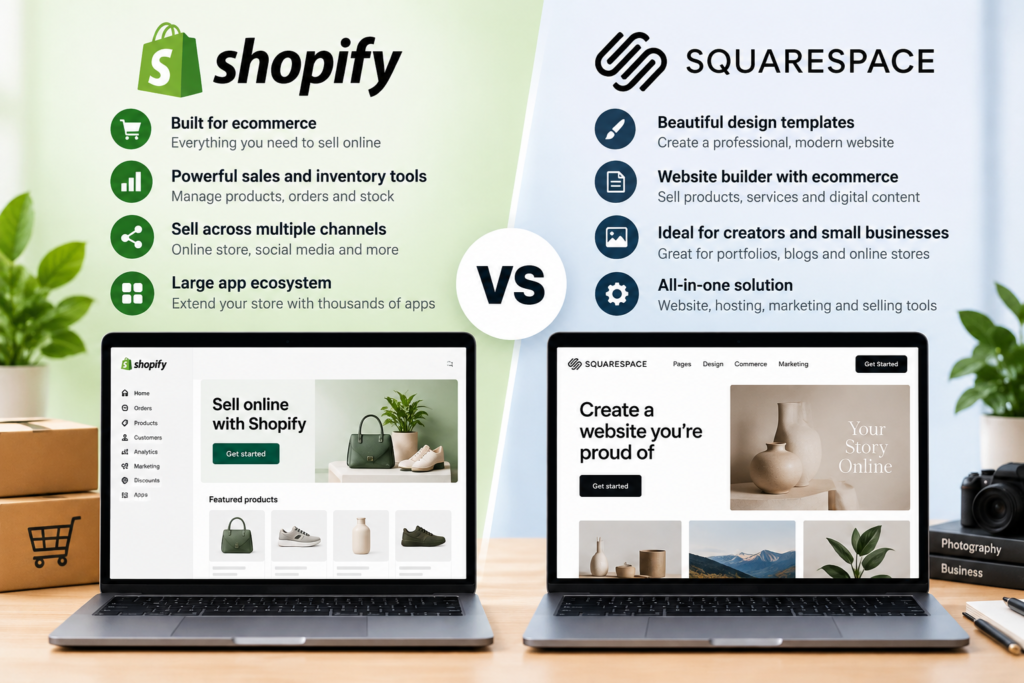
Shopify vs Squarespace: Which Is Better for Selling Online in 2026?
Shopify vs Squarespace is a common decision for entrepreneurs and small businesses planning to sell products online. Both platforms allow you to create a professional website, manage products, accept payments, and operate an online store without building everything from scratch. However, they approach ecommerce differently, and those differences can become more important as your business […]

Parallels Desktop vs VMware Fusion: Which Is Better for Running Windows on Mac in 2026?
Parallels Desktop is best for Mac users who want seamless Windows integration and easy setup. VMware Fusion is better for those seeking free virtualization, especially developers and occasional Windows users.

Black Friday Tracking Blind Spots: How Cookie Consent Affects Marketing Data and Attribution
Black Friday tracking blind spots can make campaign performance harder to interpret at exactly the time marketers need reliable data most. Ecommerce brands may see orders and leads increasing while analytics, advertising platforms, and other marketing systems provide an incomplete picture of which campaigns actually influenced those conversions. That doesn’t necessarily mean something is broken. […]