
This article may contain affiliate links. We may earn a commission at no additional cost to you; this does not determine our editorial conclusions.
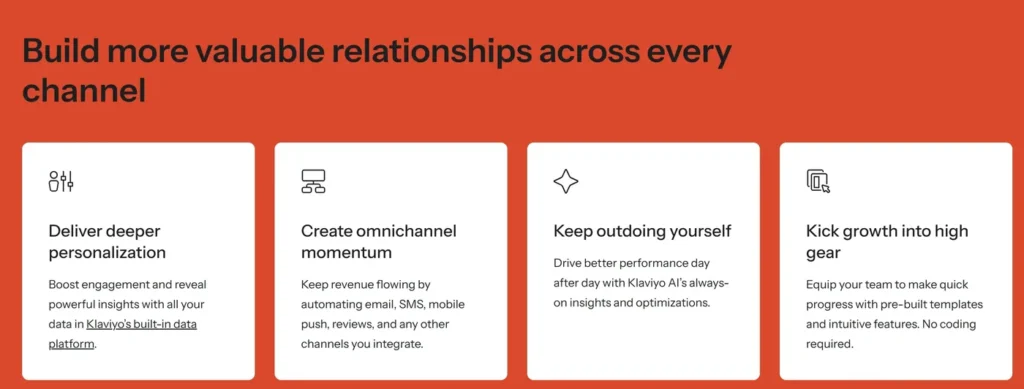
Klaviyo is one of the most widely used marketing automation platforms for eCommerce brands that want to turn customer behavior into revenue. It combines email marketing, SMS campaigns, and customer data analytics into one system designed for personalized growth.
For online businesses, Klaviyo solves a critical problem: most traffic doesn’t convert immediately. Instead of losing those visitors, Klaviyo helps brands re-engage them through automated, behavior-based messaging that feels personal and timely.
In today’s competitive digital landscape, tools like Klaviyo play a central role in CRM software ecosystems, especially for direct-to-consumer (DTC) brands. It integrates customer data, purchase history, and browsing behavior into one unified profile, enabling smarter decisions and more targeted marketing.
At its core, Klaviyo is built around data-driven marketing automation, similar in philosophy to modern “loop marketing” strategies where every customer interaction feeds back into better personalization, stronger retention, and improved lifetime value.
What is Klaviyo?
Klaviyo Marketing is a cloud-based automation and customer data platform built specifically for eCommerce businesses that want to grow through better personalization and smarter communication.
At its core, it works by collecting real-time data from your online store—things like what products people view, what they add to their cart, and what they actually end up buying. Instead of treating all customers the same, Klaviyo uses that behavior to shape how and when you communicate with them.
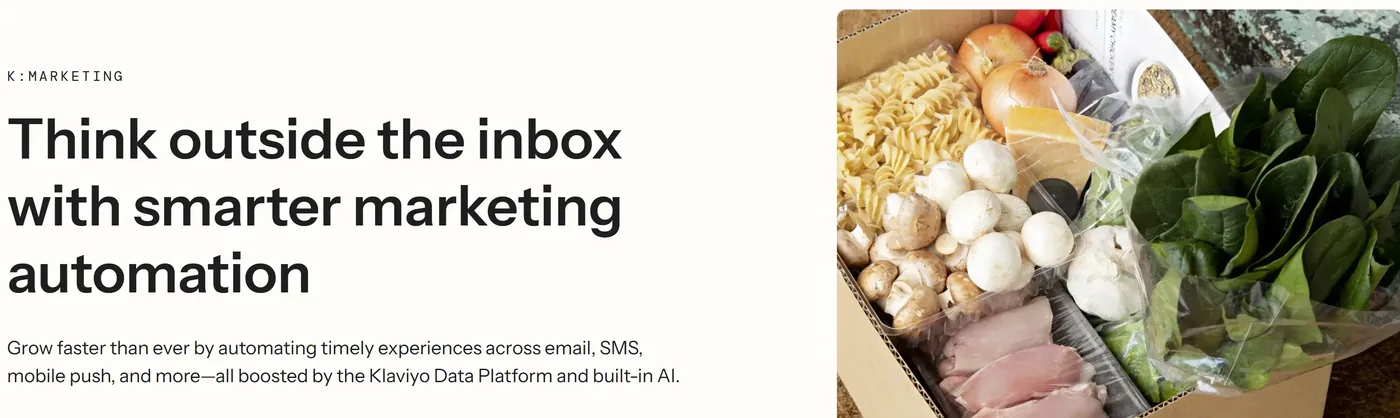
In practice, this means your marketing becomes much more responsive and relevant. A first-time visitor might receive a welcome email series, while someone who abandoned their cart gets a timely reminder or even a follow-up SMS. Returning customers might see product recommendations based on what they’ve already purchased.
So instead of manually guessing what to send and when, Klaviyo helps you react to what your customers are actually doing in real time, turning those actions into more personalized and effective marketing.
How Klaviyo Marketing Works (Step-by-Step Overview)
Step 1: Klaviyo connects to your online store
Klaviyo integrates directly with your eCommerce platform and starts tracking customer behavior in real time. Every action—such as browsing products, adding items to cart, or making a purchase—is captured automatically.
Step 2: It builds a complete customer profile
As data comes in, Klaviyo creates a detailed profile for each visitor. This profile grows over time and includes browsing behavior, purchase history, and engagement with emails or SMS messages.
Step 3: It groups customers into meaningful segments
Klaviyo automatically organizes customers into segments based on behavior and value. For example, new visitors, repeat buyers, inactive customers, and high-value shoppers are all grouped separately without manual sorting.
Step 4: It triggers automated marketing flows
Once segments and behaviors are defined, Klaviyo starts sending automated messages. If someone abandons their cart, views a product, or makes a purchase, Klaviyo responds with relevant emails or SMS messages at the right time.
Step 5: It continuously learns and improves performance
As customers interact with your campaigns, Klaviyo tracks results and refines targeting over time. You can see which flows generate revenue, which messages convert best, and where users drop off, helping you optimize future campaigns.
Key Features of Klaviyo Marketing for eCommerce Marketing Automation
Email Marketing Automation
Klaviyo allows businesses to build automated email flows using drag-and-drop builders. These flows are triggered by real customer behavior such as browsing products, abandoning carts, or completing a purchase. This reflects how modern email systems scale more effectively when they respond to user behavior in real time.
SMS Marketing Integration
Brands can send real-time SMS messages for promotions, reminders, and abandoned cart recovery. SMS is especially powerful for time-sensitive offers because it reaches customers instantly, often leading to higher engagement rates compared to email alone.
Advanced Segmentation
Klaviyo uses behavioral and transactional data to create precise audience segments. Klaviyo uses behavioral and transactional data to create precise audience segments, similar to how modern lead scoring systems work.
eCommerce Integrations
Klaviyo works seamlessly with platforms like Shopify, WooCommerce, BigCommerce, and Magento. These integrations allow it to sync product data, customer behavior, and order history in real time without manual setup.
Revenue Attribution Tracking
One of Klaviyo’s most valuable features is its ability to track revenue directly from campaigns. You can see exactly how much income each email or SMS flow generates, helping you understand ROI at a granular level instead of relying on surface-level metrics like open rates or clicks. This aligns with broader insights on email performance tracking.
A/B Testing
Klaviyo allows marketers to test subject lines, email content, timing, and even entire flows. Strong experimentation practices are further explored in A/B testing strategies, which directly improve conversion rates over time.
Predictive Analytics & AI Insights
Klaviyo also uses predictive analytics to estimate customer lifetime value, churn risk, and expected purchase dates. This helps businesses proactively target customers before they drop off or become inactive.
Personalized Product Recommendations
The platform can automatically insert product recommendations into emails based on browsing and purchase history, improving personalization and engagement rates.
Flow-Based Automation Engine
Instead of static campaigns, Klaviyo uses automation flows that react to customer behavior in real time. These flows can include multi-step sequences with delays, conditions, and branching logic depending on how users respond.
Real-Time Data Syncing
All customer actions are updated in real time, meaning your campaigns are always based on the latest behavior. This aligns with CRM usability insights from, where real-time data improves decision-making.
Performance Dashboards
Klaviyo provides detailed analytics dashboards that show engagement, conversion rates, and revenue performance. These dashboards help teams connect insights from broader marketing performance trends.
Benefits of Using Klaviyo Marketing in Marketing Automation
- Higher conversion rates through personalization, supported by studies showing email personalization can significantly increase revenue per campaign.
- Increased revenue per customer via upselling, with research showing email marketing delivers an average ROI of $36 for every $1 spent, making it one of the highest-performing digital marketing channels. Source: .
- Strong analytics for data-driven decisions.
- Better retention with lifecycle automation.
- Improved engagement through SMS + email
When Should You Use Klaviyo?
Klaviyo makes the most sense when your business depends heavily on repeat customers and you want your marketing to respond automatically to customer behavior instead of running everything manually.
It’s especially useful if you’re running an eCommerce store where people browse, add to cart, and don’t always buy on the first visit. In situations like this, Klaviyo helps you stay connected with those visitors through timely emails or SMS messages that feel relevant rather than random.
You should also consider Klaviyo when you’re ready to move beyond basic email marketing and start building more structured customer journeys. If you want to segment your audience, personalize product recommendations, and trigger campaigns based on real actions instead of guesswork, Klaviyo gives you that level of control.
In short, Klaviyo is a strong fit when your goal is to increase repeat purchases, improve customer retention, and turn behavioral data into automated marketing that runs in the background while your store continues to grow.
Implementation: How to Set Up Klaviyo
Step 1: Connect Your Store
Start by integrating Klaviyo with your eCommerce platform such as Shopify or WooCommerce. This allows Klaviyo to automatically sync customer data, product information, and order history in real time.
Step 2: Import and Sync Customer Data
Once connected, Klaviyo will begin pulling in existing customer lists, purchase history, and behavioral data. This forms the foundation for segmentation and personalization.
Step 3: Set Up Core Automation Flows
Next, build your essential automated workflows. Most businesses start with a welcome series, abandoned cart flow, and post-purchase follow-ups to immediately engage customers at key moments.
Step 4: Create Customer Segments
Organize your audience into meaningful groups based on behavior, purchase frequency, or engagement level. These segments allow you to send more targeted and relevant campaigns.
Step 5: Launch Campaigns
After setting up flows and segments, you can start sending targeted email and SMS campaigns. These can include promotions, product launches, or re-engagement messages.
Step 6: Monitor and Optimize Performance
Finally, track performance using Klaviyo’s analytics dashboard. Review which campaigns generate revenue, test variations, and continuously refine your automation strategy for better results.
Klaviyo and Customer Data Strategy
Klaviyo is built around a data-first marketing approach, where every customer action feeds directly into how your marketing works. Instead of relying on assumptions, it uses real behavior—like product views, purchases, and email engagement—to continuously refine how you communicate with each customer.
What makes this powerful is how everything connects in a continuous cycle. When a customer interacts with your store, that action generates data. Klaviyo then uses that data to improve segmentation, which helps you send more relevant and personalized messages. Those better messages then encourage more engagement and purchases, which creates even more data for the system to learn from.
Over time, this creates what many marketers describe as a loop marketing effect, where your customer insights and marketing performance keep improving together. The more your audience engages, the smarter and more accurate your targeting becomes.
FAQ: Klaviyo Marketing Automation
1. What is Klaviyo used for?
Klaviyo is used for email and SMS marketing automation in eCommerce businesses.
2. Is Klaviyo a CRM software?
No, Klaviyo is not a full CRM. It focuses on marketing automation and customer behavior tracking.
3. How does Klaviyo increase sales?
It increases sales through automated campaigns like abandoned cart recovery and product recommendations.
4. What makes Klaviyo different?
Klaviyo uses real-time behavioral data to personalize marketing.
5. Is Klaviyo good for small businesses?
Yes, especially for Shopify-based stores and growing eCommerce brands.
6. Does Klaviyo support SMS marketing?
Yes, it supports full SMS automation campaigns.
7. What industries use Klaviyo?
Mostly eCommerce industries like fashion, beauty, fitness, and consumer goods.
Final Thoughts
Klaviyo is a powerful marketing automation platform for eCommerce growth, built for personalization, retention, and lifecycle marketing.
Its strength lies in combining email, SMS, and customer data analytics into one system that drives measurable revenue.
However, it is not a full CRM software solution. Businesses needing sales pipelines and customer support systems may benefit more from platforms like HubSpot.
If you’re ready to grow your eCommerce brand with smarter automation and deeper personalization, you can start exploring Klaviyo for free to see how it fits your business.
TOOLS MENTIONED
Explore related tool profiles


We research and organize marketing software around practical use cases. Product claims are included only when supported by available sources.
Read our editorial policy →Related guides
Online Store Launch Checklist: From Product Idea to First Order
Prepare your first online store with a practical checklist for products, checkout, delivery, order testing and a focused customer-acquisition plan.

How to Outsource Content Creation Without Losing Your Brand Voice
Learning how to outsource content creation can solve one of the biggest problems in content marketing: there is always more content to create than there is time to create it. Blog posts need writing, landing pages need updating, emails need preparing, and social channels need a steady supply of useful material. But handing the work […]

Vista Social vs Metricool: Which Social Media Management Tool Is Better in 2026?
Vista Social vs Metricool is a close comparison because both platforms bring social media scheduling, analytics, content planning, and management into one place, but they approach the job differently. Vista Social puts more emphasis on engagement, team workflows, automation, and managing conversations alongside publishing, while Metricool has a particularly strong focus on planning, analytics, competitor […]