
This article may contain affiliate links. We may earn a commission at no additional cost to you; this does not determine our editorial conclusions.
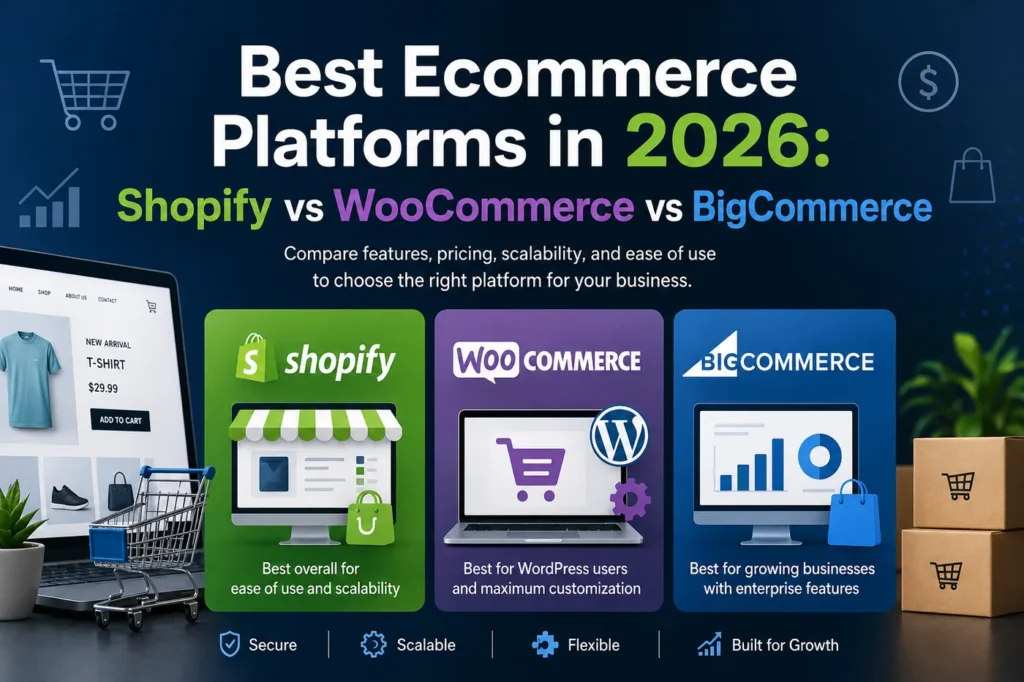
Shopify, WooCommerce, and BigCommerce are among the best ecommerce platforms in 2026, but Shopify is the best overall choice for most businesses thanks to its ease of use, fully hosted infrastructure, extensive app ecosystem, and ability to scale from small startups to established brands. WooCommerce is ideal for WordPress users who want maximum customization, while BigCommerce is a strong option for growing businesses with more complex ecommerce requirements.
As online shopping continues to grow, choosing the right ecommerce platform can have a significant impact on your store’s success. The platform you select affects everything from website performance and checkout experience to inventory management, marketing integrations, and long-term scalability. According to the U.S. Census Bureau, ecommerce sales account for a growing share of total retail sales, making it increasingly important for businesses to invest in reliable online selling technology.
As online shopping continues to expand, ecommerce has become an increasingly important part of the retail economy. According to the U.S. Census Bureau, ecommerce sales account for a growing share of total retail sales in the United States, highlighting the importance of choosing a reliable platform that can support long-term business growth.
Whether you’re launching your first store or migrating from another platform, the right solution should make it easier to manage products, process payments, and reach customers across multiple channels.
For many online stores, platform choice also affects content, SEO, and customer acquisition, which is why having a clear content marketing strategy can make it easier to attract the right shoppers after launch.
For entrepreneurs and content-driven brands looking for the fastest path to launching and scaling an online business, Shopify consistently stands out as one of the strongest options available.
Quick Rundown: Best Ecommerce Platforms
• Shopify — Best overall for ease of use and scalability
• WooCommerce — Best for WordPress users and maximum customization
• BigCommerce — Best for growing businesses with enterprise features
1. Shopify — Best Overall Ecommerce Platform
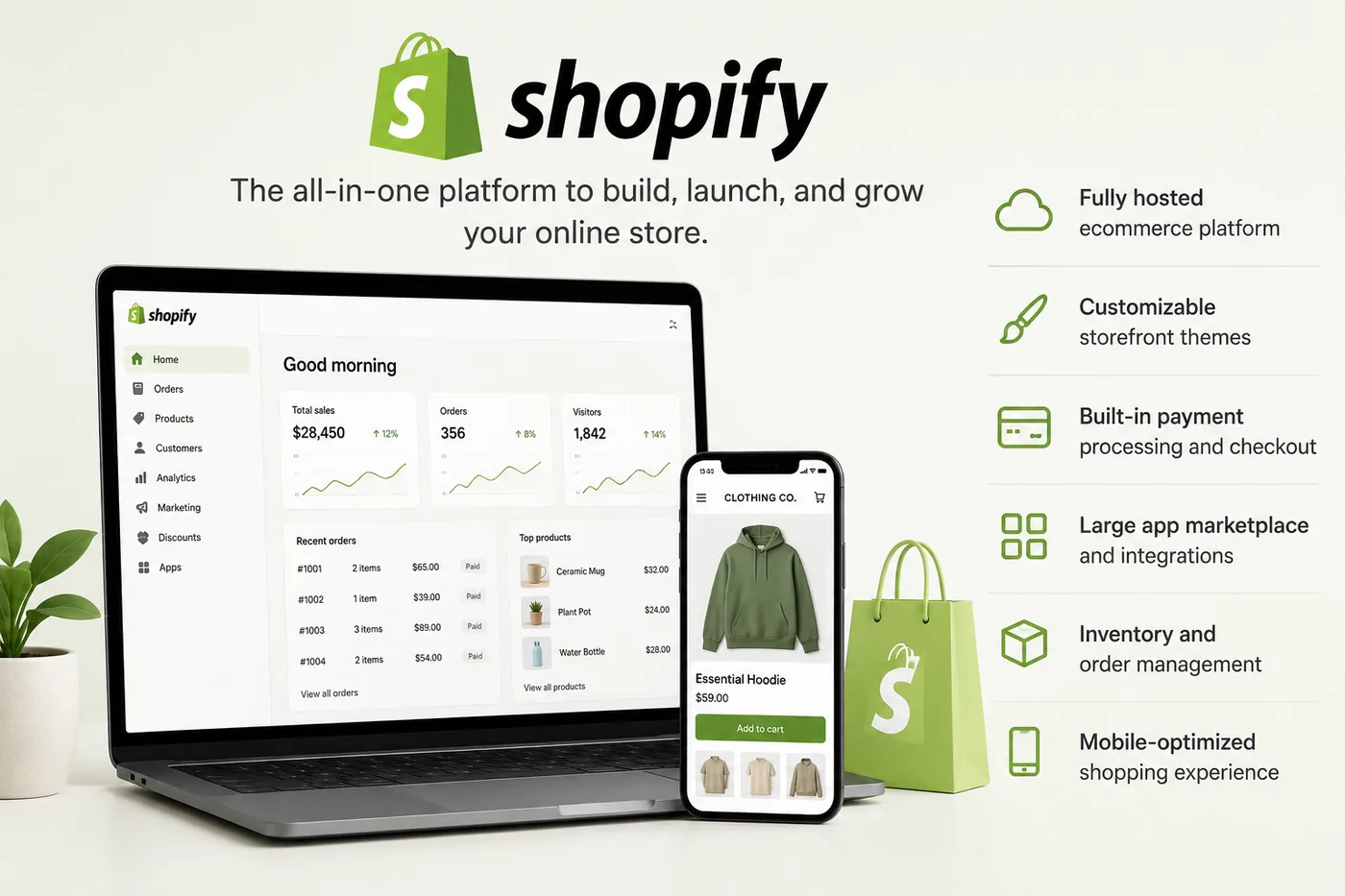
Shopify is an all-in-one ecommerce platform that makes it easy to build, launch, and grow an online store without managing servers, security updates, or complex technical configurations. Everything from product listings and inventory tracking to payments, shipping, and analytics is accessible through a streamlined dashboard, allowing business owners to focus on selling rather than maintaining infrastructure.
For creators, startups, and established brands alike, Shopify offers an attractive balance of simplicity and scalability. New merchants can launch a professional-looking store in just a few hours using customizable themes, while growing businesses can expand with thousands of apps, marketing integrations, and advanced commerce features. Whether you’re selling physical products, digital downloads, or subscriptions, Shopify provides a polished experience for both merchants and customers.
Key Features
• Fully hosted ecommerce platform
• Customizable storefront themes
• Built-in payment processing and checkout
• Large app marketplace and integrations
• Inventory and order management
• Mobile-optimized shopping experience
Real-World Use Case
A YouTube creator launches an online store to sell branded merchandise and digital products using Shopify. Without hiring a developer, they manage inventory, process payments, and fulfill orders from a single dashboard while integrating email marketing and social commerce tools.
Once the store is live, many Shopify merchants rely on email sequences to recover carts, promote new products, and build customer loyalty, making email automation tools for scaling campaigns a natural next step for growth.
Best For
Entrepreneurs, creators, small businesses, and growing ecommerce brands looking for an easy-to-manage platform with room to scale.
Build, launch, and grow your ecommerce business faster with Shopify.
2. WooCommerce — Best for WordPress Users and Maximum Customization
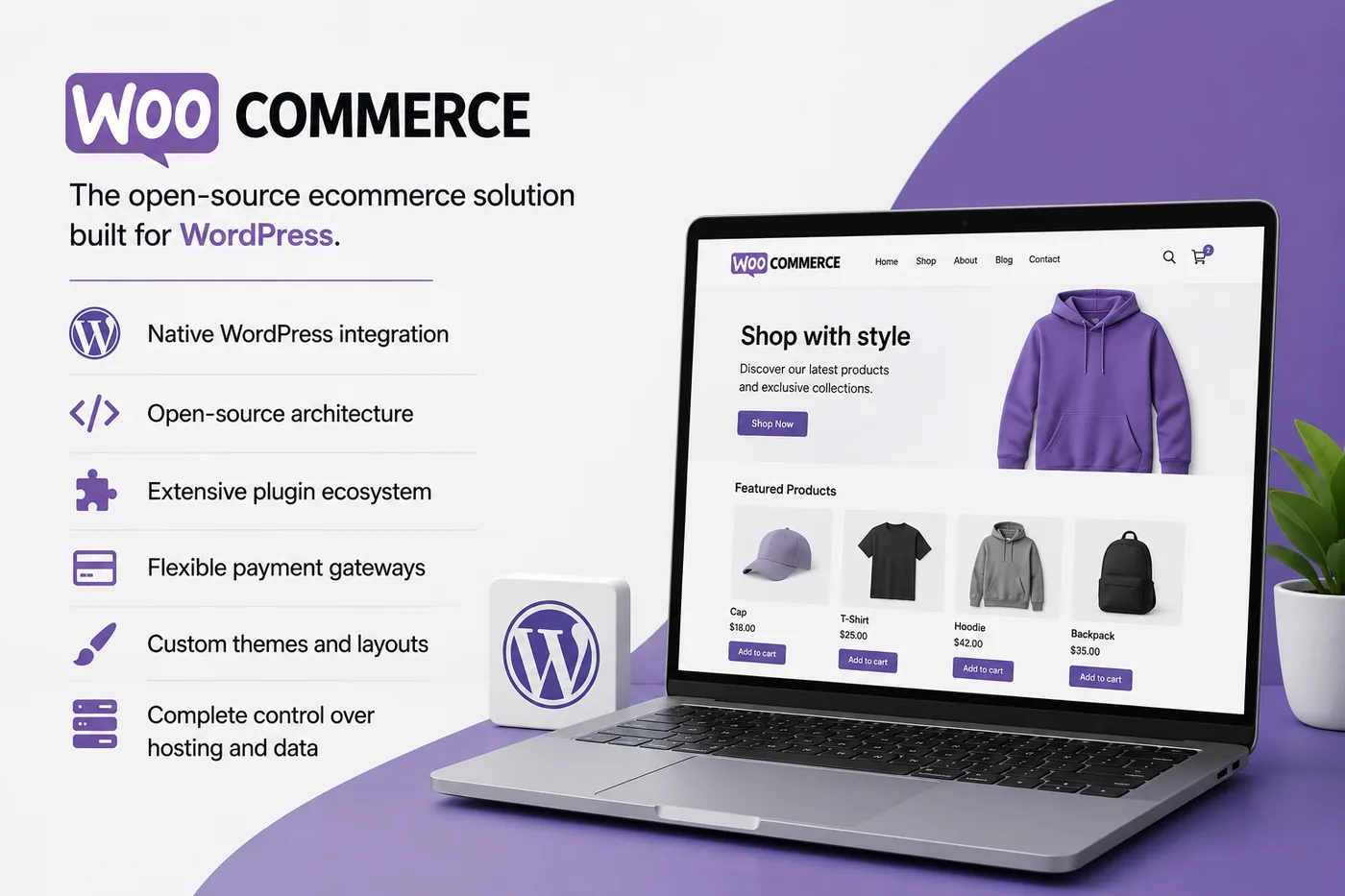
WooCommerce is an open-source ecommerce solution built specifically for WordPress, giving website owners complete control over their online stores. Unlike hosted platforms, WooCommerce lets users customize nearly every aspect of the shopping experience, making it a favorite among developers, agencies, and businesses with unique technical requirements.
Its greatest strength is flexibility. Store owners can choose their own hosting provider, install thousands of plugins, customize checkout flows, and extend functionality through code when needed. This makes WooCommerce particularly appealing to businesses that already operate WordPress websites and want ecommerce capabilities without moving to a different platform.
Key Features
• Native WordPress integration
• Open-source architecture
• Extensive plugin ecosystem
• Flexible payment gateways
• Custom themes and layouts
• Complete control over hosting and data
Real-World Use Case
A content publisher with an established WordPress blog adds WooCommerce to sell online courses and premium resources while keeping all content and commerce under the same website.
Best For
WordPress users, developers, agencies, and businesses that prioritize customization and ownership.
3. BigCommerce — Best for Scaling Businesses
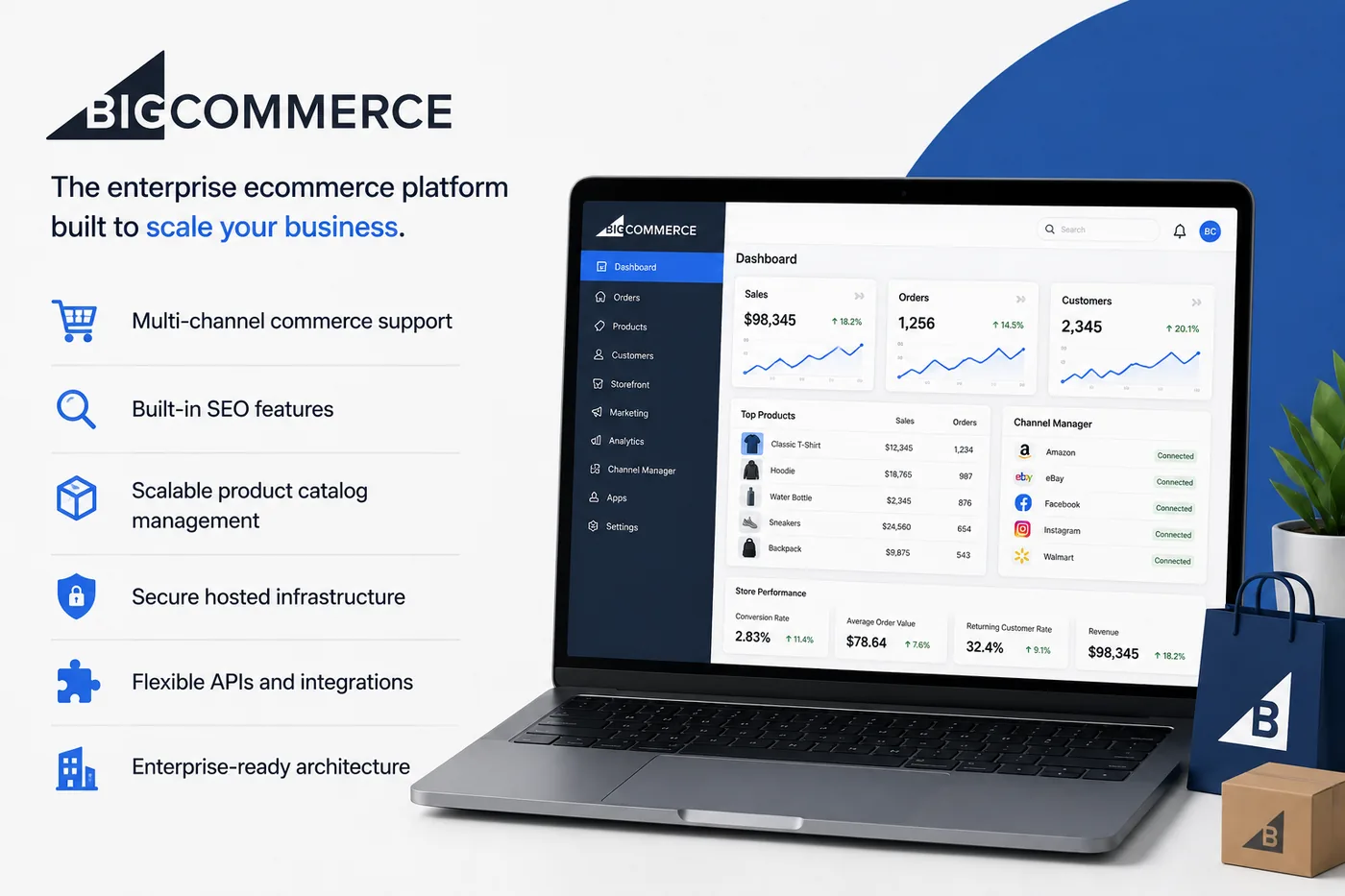
BigCommerce is a hosted ecommerce platform designed for businesses that need enterprise-grade functionality without excessive complexity. It offers a wide range of built-in capabilities—including multi-channel selling, product management, and search engine optimization tools—that reduce the need for third-party extensions as stores grow.
Many expanding retailers appreciate BigCommerce because it supports larger catalogs and multiple sales channels while maintaining strong performance. Its flexible APIs and integrations also make it suitable for organizations with more advanced operational requirements.
Key Features
• Multi-channel commerce support
• Built-in SEO features
• Scalable product catalog management
• Secure hosted infrastructure
• Flexible APIs and integrations
• Enterprise-ready architecture
Real-World Use Case
A retailer that began with a local online store expands nationally, selling through its website and multiple marketplaces while managing inventory and customer orders from a centralized platform powered by BigCommerce.
Best For
Mid-sized businesses, established retailers, and brands planning for long-term ecommerce growth.
Ecommerce Platform Comparison Table
“`html
| Feature | Shopify | WooCommerce | BigCommerce |
|---|---|---|---|
| Ease of Setup | Excellent | Moderate | Excellent |
| Hosting Included | Yes | No | Yes |
| WordPress Integration | Limited | Excellent | Good |
| App Ecosystem | Excellent | Excellent | Strong |
| Built-in Security | Yes | Depends on host | Yes |
| Best For | All-around ecommerce | WordPress sites | Scaling businesses |
“`
Who Should Choose Each Platform?
Choose Shopify if you want the easiest path to launching and scaling an online store with minimal technical complexity.
Choose WooCommerce if you already use WordPress and value maximum customization and ownership over your website.
Choose BigCommerce if your business needs enterprise-oriented capabilities and plans to manage larger catalogs or multiple sales channels.
How to Choose the Best Ecommerce Platform
The best ecommerce platform depends on your business goals, technical expertise, budget, and plans for future growth. A solo entrepreneur launching a side hustle may prioritize simplicity, while an established retailer might need advanced integrations and scalability. Before making a decision, consider the following factors.
1. Ease of Setup and Use
If you want to launch quickly without worrying about hosting, software updates, or security patches, choose a platform with a user-friendly interface and managed infrastructure. Hosted solutions like Shopify can help you get your store online faster, even if you have little technical experience.
2. Customization and Flexibility
Some businesses need complete control over design and functionality, while others prefer a streamlined experience. If deep customization is important, look for a platform that supports themes, apps, plugins, or developer tools that can adapt to your specific needs.
3. Scalability for Future Growth
Your ecommerce platform should be able to grow alongside your business. Consider whether it can handle increasing traffic, expanding product catalogs, additional staff members, and new sales channels without requiring a major migration later.
4. Built-In Features and Integrations
Compare what each platform includes out of the box, such as payment processing, inventory management, shipping tools, SEO features, analytics, and marketing integrations. A platform with strong native functionality can reduce your reliance on third-party apps.
If your ecommerce growth depends on blog traffic and search visibility, it also helps to understand how SEO content marketing results can support long-term customer acquisition.
5. Total Cost of Ownership
Don’t focus solely on monthly subscription fees. Factor in expenses such as hosting, premium themes, extensions, transaction fees, payment processing costs, and ongoing maintenance to understand the long-term investment.
6. Multi-Channel Selling Capabilities
Many businesses sell through websites, social media platforms, online marketplaces, and physical locations. Choosing a platform that supports multiple sales channels can simplify inventory management and provide a more consistent customer experience.
Selling through multiple channels can help businesses reach more customers and diversify revenue streams. Google Merchant Center provides guidance on showcasing products across Google surfaces, making multi-channel capabilities an important consideration when evaluating ecommerce platforms.
7. Security and Reliability
Protecting customer information is essential for any online business. Look for features such as SSL certificates, secure payment processing, fraud protection, backups, and reliable uptime to keep your store running smoothly and build customer trust.
8. Support and Ecosystem
Responsive customer support, comprehensive documentation, and an active community can make a big difference when you encounter technical issues or want to expand your store’s capabilities. Platforms with large app marketplaces and partner ecosystems also provide more opportunities to add new functionality as your business evolves.
Ultimately, the right ecommerce platform should make it easier to sell products, manage operations, and scale confidently. For many entrepreneurs, creators, and small businesses, Shopify offers an excellent combination of simplicity, flexibility, and long-term growth potential, making it one of the strongest all-around choices in 2026.
Frequently Asked Questions
What is the best ecommerce platform in 2026?
The best ecommerce platform depends on your business needs, but Shopify, WooCommerce, and BigCommerce are among the leading options. Shopify is the best overall choice for most users because it combines ease of use, built-in features, and scalability in a fully hosted solution.
Why is Shopify a good choice for beginners?
Shopify is designed to simplify the process of launching and managing an online store. It handles hosting, security, software updates, and payment processing, allowing beginners to focus on products and customers instead of technical maintenance. Its intuitive interface and extensive app marketplace also make it easy to add new functionality as your business grows.
Is WooCommerce better than Shopify?
WooCommerce offers greater flexibility and customization, especially for businesses already using WordPress. However, Shopify provides a more streamlined experience with less technical overhead, making it a better fit for users who want an all-in-one hosted ecommerce platform.
Can I sell digital products and physical products on Shopify?
Yes. Shopify supports a wide variety of product types, including physical goods, digital downloads, subscriptions, gift cards, and services. Merchants can also integrate apps to extend functionality for specialized business models.
Which ecommerce platform is best for WordPress users?
WooCommerce is the natural choice for businesses that already operate on WordPress and want complete control over their website design and functionality. It integrates directly with WordPress and supports thousands of plugins and themes.
Is BigCommerce good for growing businesses?
Yes. BigCommerce includes many enterprise-ready features, supports large product catalogs, and offers multi-channel selling capabilities, making it a strong option for businesses planning to scale.
What should I consider before choosing an ecommerce platform?
Evaluate factors such as ease of use, customization options, scalability, built-in features, integrations, security, long-term costs, and customer support. The best platform should match both your current needs and your future growth plans.
Final Verdict
All three platforms are capable ecommerce solutions, but they serve different audiences. WooCommerce excels for users who want complete control within the WordPress ecosystem, while BigCommerce offers robust features for growing businesses.
For most entrepreneurs, creators, and small to mid-sized companies, Shopify stands out as the best overall ecommerce platform in 2026. Its combination of ease of use, reliable infrastructure, and extensive ecosystem makes it an excellent long-term investment for businesses that want to focus on selling rather than managing technology.
Ready to launch your online store? Try Shopify and start building your ecommerce business today.
TOOLS MENTIONED
Explore related tool profiles

A B2C CRM and marketing automation platform focused on ecommerce email, SMS, segmentation and customer data.

We research and organize marketing software around practical use cases. Product claims are included only when supported by available sources.
Read our editorial policy →Related guides

Online Store Launch Checklist: From Product Idea to First Order
Prepare your first online store with a practical checklist for products, checkout, delivery, order testing and a focused customer-acquisition plan.

How to Outsource Content Creation Without Losing Your Brand Voice
Learning how to outsource content creation can solve one of the biggest problems in content marketing: there is always more content to create than there is time to create it. Blog posts need writing, landing pages need updating, emails need preparing, and social channels need a steady supply of useful material. But handing the work […]

Vista Social vs Metricool: Which Social Media Management Tool Is Better in 2026?
Vista Social vs Metricool is a close comparison because both platforms bring social media scheduling, analytics, content planning, and management into one place, but they approach the job differently. Vista Social puts more emphasis on engagement, team workflows, automation, and managing conversations alongside publishing, while Metricool has a particularly strong focus on planning, analytics, competitor […]