Negative reviews are unavoidable, but how you respond can make or break your business. Here's what you need to know:
- 98% of consumers read reviews before buying, and 97% pay attention to how businesses respond.
- Ignoring criticism? Bad idea - 47% of people avoid businesses that seem indifferent.
- Responding well can boost trust, customer loyalty, and even revenue, with 85% of companies reporting increased earnings after engaging with reviews.
To handle negative feedback effectively:
- Stay calm and take time to review the complaint.
- Respond quickly (within 24–48 hours) and use a professional tone.
- Acknowledge the issue and show empathy.
- Offer a clear solution and take responsibility.
- Move deeper discussions offline to resolve matters privately.
- Track reviews using tools to monitor feedback and respond promptly.
Key takeaway: A thoughtful response isn't just damage control - it’s a chance to show your values, build trust, and turn unhappy customers into loyal ones.
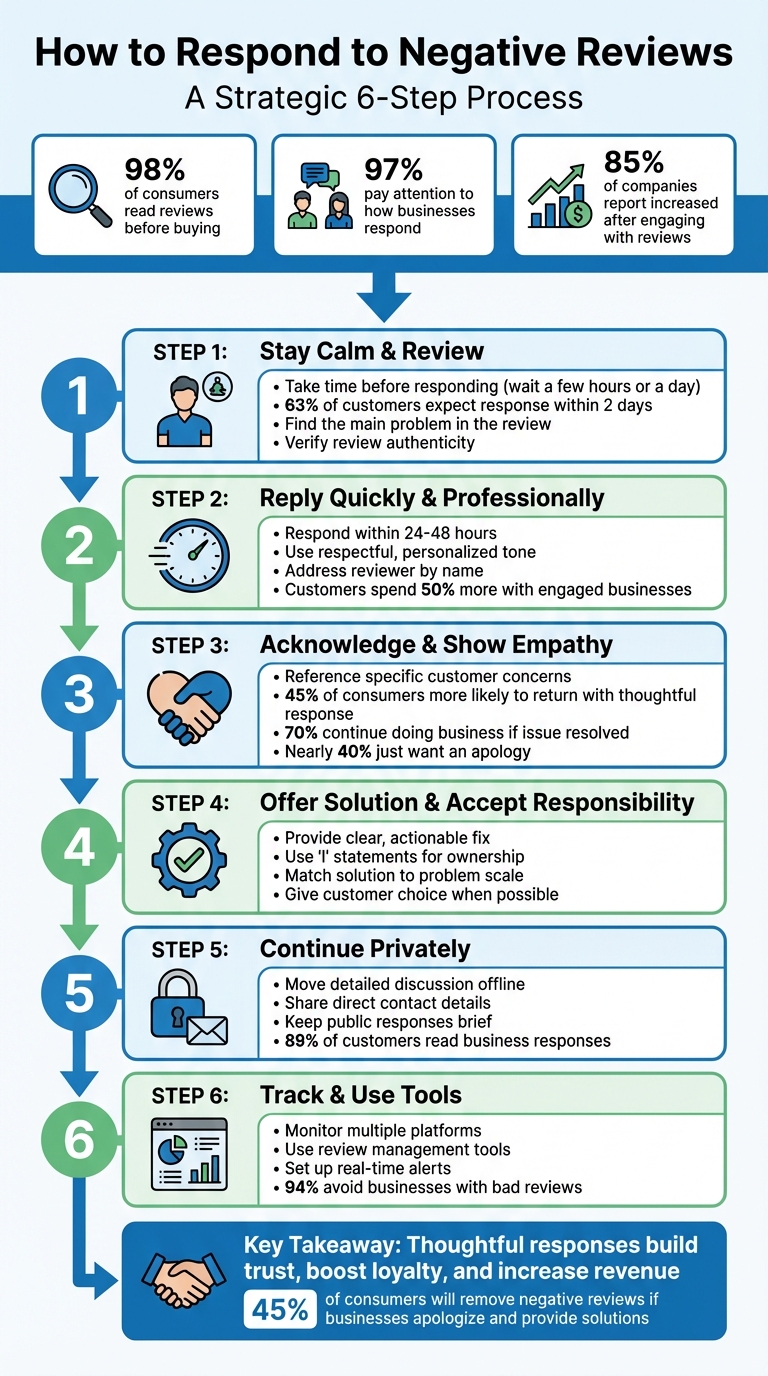
6-Step Process for Responding to Negative Reviews Effectively
Responding to Negative Reviews – A Step by Step Guide for Small Business Owners
sbb-itb-645e3f7
Step 1: Stay Calm and Review the Feedback
Harsh reviews can sting, but reacting too quickly can backfire. 97% of readers also pay attention to how you respond, so a defensive or emotional reply can do more harm than good. When emotions run high, it’s easy to let frustration slip into your words, potentially escalating the situation. Remember, every response you post contributes to your public image.
Take Time Before Responding
Negative feedback can feel overwhelming. Some business owners become so upset that they freeze, unsure of how to proceed. Ignoring the review isn’t the answer, but neither is rushing to reply. Instead, give yourself time to cool off. Samara Scott-Hunter recommends waiting until you feel balanced before drafting your response.
Taking a few hours - or even a day - allows you to approach the situation with a calm, clear mind. This pause helps you view criticism constructively, as a challenge to address rather than a personal attack. That’s especially important given that 63% of customers expect a response within two days. Once you’re ready, shift your focus to understanding the review’s core concerns.
Find the Main Problem
After regaining your composure, carefully read the review to pinpoint the specific issues. Look for details like the date of the visit, the product purchased, or staff interactions mentioned. Try to separate emotional language from the actual problem. Was the issue related to unmet expectations, a miscommunication, a technical error, or a service lapse?
Before responding, confirm the review’s authenticity. Check the reviewer’s profile or compare their claims with your records. Some complaints may come from serial "trollers" or competitors attempting to discredit your business; these can often be reported for removal. For legitimate reviews, even harsh ones, consider the feedback an opportunity to improve. Since 85% of customers evaluate how businesses handle negative reviews before making a purchase, identifying and addressing the real issue can turn a dissatisfied customer into a loyal supporter.
Step 2: Reply Quickly and Professionally
Once you've pinpointed the issue, the next step is to craft a response that’s both prompt and professional. Timing is everything here - a slow reply can come across as indifferent, while a quick and polished response shows that you genuinely value customer feedback. In fact, businesses that actively engage with reviews see customers spending nearly 50% more with them. With the issue clearly identified, your focus should shift to responding swiftly and effectively.
Use a Respectful Tone
Your tone can make or break the interaction. Start by addressing the reviewer by name and referencing specific details from their feedback to show you’ve taken the time to understand their concerns. Phrases like "Thank you for bringing this to our attention" or "We appreciate your feedback" set the right tone. Avoid generic responses - personalized, empathetic replies are far more impactful. For instance, saying, "I understand how frustrating this must have been" validates the customer’s feelings and helps to defuse tension. This approach not only builds trust but also humanizes your online brand. It’s worth noting that 85% of businesses that respond to feedback report increased revenue, largely because empathy signals to customers that their experience truly matters.
Respond Within 24-48 Hours
Speed is crucial. A reply within 24 to 48 hours shows attentiveness and can prevent negative feedback from swaying potential customers. Plus, quick responses can influence your local search rankings, as platforms like Google factor in review response rates when determining visibility.
To stay on top of things, set up real-time alerts through tools like Google Business Profile and Yelp. Assign team members to monitor and respond to reviews promptly, ensuring no comment goes unanswered. While response templates can help save time, always personalize replies by including the customer’s name and addressing their specific concerns. This balance of efficiency and personalization is key to maintaining a strong online presence.
Step 3: Acknowledge the Issue and Show Empathy
Once you've crafted a respectful and prompt reply, the next step is to focus on empathy. Acknowledging the customer's experience is about more than just addressing the issue - it’s a chance to rebuild trust. When you demonstrate genuine understanding and validate their concerns, you show that their feelings matter. Here's why it’s so important: 45% of consumers are more likely to return to a business that responds thoughtfully to negative feedback, and 70% of customers who voice complaints will continue doing business with a company if their issue is resolved effectively.
Recognize the Customer's Experience
Start by referencing the specific problem the customer mentioned, whether it’s slow service, damaged goods, or something else. This shows you’ve taken the time to read their feedback instead of using a generic response or AI-based copywriting without human oversight. Reflecting the customer’s own words back to them reinforces that you’re listening.
For instance, instead of offering a vague, “We’re sorry you had a bad experience,” say something like, “We’re truly sorry to hear that your order arrived damaged and that our team didn’t resolve the issue as quickly as expected.” Including these details makes your response feel authentic and personal, turning it from a template into a real conversation. And remember, 97% of people read review responses, so your acknowledgment is as much for future customers as it is for the reviewer.
Once you’ve validated their experience, it’s time to offer a sincere apology.
Apologize Sincerely
A heartfelt apology can go a long way. In fact, nearly 40% of reviewers just want an apology when they leave negative feedback. Even more compelling, 45% of consumers will remove a negative review if the business acknowledges the issue, apologizes, and provides a solution. The key here is to avoid conditional or half-hearted apologies. Be direct and take full accountability.
Use clear, straightforward language like: “We apologize for the long wait you experienced on Saturday” or “I’m sorry for the error with your order.” Personalizing the response with “I” adds a human touch and shows that someone is taking responsibility.
As Bazaarvoice wisely puts it:
Everyone likes to feel heard. Acknowledge the issue and apologize, even if you think the review isn't necessarily warranted.
Step 4: Offer a Solution and Accept Responsibility
Following your apology, offering a clear and responsible solution is key to rebuilding trust. This is your chance to turn a dissatisfied customer into a loyal one. In fact, 70% of customers who voice complaints will continue doing business with a company if their issue is resolved effectively. The solution should be specific, actionable, and directly address the problem.
Give a Clear Fix
The remedy you provide needs to match the scale of the issue. For instance:
- For a defective product, offer a full refund or a free replacement.
- If the issue stems from poor service, consider a discount or a personal invitation to return.
- In cases of billing errors, provide an immediate refund along with a small goodwill gesture, like a discount.
- For long wait times, a complimentary item - like a free appetizer or drink - can help smooth things over.
Whenever possible, give the customer a choice. This not only empowers them but also enhances satisfaction. For example, you might say:
"I’d like to offer you either a full refund or a replacement product shipped at no charge. Please let me know which option works best for you."
A great example of this approach comes from Geraldine Hernandez, CEO and co-founder of Savory Crust Gourmet Empanadas. In September 2025, she responded to a one-star Yelp review alleging food poisoning by publicly sharing her restaurant’s flawless health inspection records. Instead of escalating the situation, she donated a portion of her profits to the Crohn’s & Colitis Foundation on behalf of the customer. This thoughtful response garnered nearly 400 reactions and 300 comments, turning a potential PR disaster into a positive community moment. Hernandez’s example shows how a thoughtful, personal solution can transform a complaint into an opportunity.
Once you’ve offered a clear fix, it’s equally important to show personal accountability.
Show Ownership with Direct Language
The way you communicate your solution is just as important as the solution itself. Use "I" statements to show accountability and make it clear there’s a person behind the resolution. For example:
- "I have issued a refund for your purchase."
- "I’d like to personally invite you back to experience our improved service."
This approach feels more genuine than a detached corporate response. Avoid phrases like "We’re sorry if you felt..." - they can come across as dismissive and avoid responsibility. Instead, use direct language, such as:
- "I’ve personally reviewed our stock to ensure this doesn’t happen again."
- "We’re implementing additional staff training based on your feedback."
These statements not only resolve the immediate issue but also demonstrate a commitment to preventing similar problems in the future. For more complex concerns, provide direct contact information so the issue can be addressed privately and efficiently. Taking ownership builds credibility and strengthens your brand’s reputation for accountability.
Step 5: Continue the Discussion Privately When Needed
Once you've acknowledged a concern publicly, it's often best to move the detailed conversation to a private channel. Here's why: a whopping 98% of consumers check online reviews before making a purchase. That initial public response is your chance to make a strong first impression, but resolving the issue thoroughly is usually more effective in private. This approach not only respects customer privacy but also avoids a drawn-out public back-and-forth.
The strategy? Start with a brief, professional public reply to show you're attentive and accountable. Then, invite the customer to reach out privately for a deeper discussion. Be sure to include clear, direct contact details so they know exactly how to proceed.
Share Your Contact Details
In your public response, provide a specific email address or phone number rather than pointing customers to a generic support line. For instance, you could say:
"We'd love to resolve this for you. Please reach out to us at customercare@yourcompany.com or call (555) 123-4567."
This shows you're prioritizing the issue and have a team ready to help.
If the situation involves verifying details, you can ask the customer to include their order or review number in their message. For example, in cases of potentially suspicious reviews, you might add:
"We couldn't locate this order in our system. Please contact us with your order number so we can investigate further."
This not only encourages the customer to follow up but also subtly signals to others that the review may not be genuine - without sounding accusatory.
Keep Public Responses Brief
Stick to the main concern and a heartfelt apology in your public reply. Save the detailed solutions for private conversations. Why? Because 89% of customers take the time to read how businesses respond to reviews. A short, thoughtful response keeps their attention and avoids unnecessary public debates.
Phrases like "We’d like to make this right" or "Please contact us so we can resolve this to your satisfaction" work well to transition the discussion offline. This approach helps prevent prolonged public disputes, protects sensitive customer information (like billing details), and gives you the opportunity to provide a personalized resolution. Handling the issue privately not only resolves the problem but also reinforces the steps you've taken to protect your brand's reputation.
Step 6: Track Reviews and Use Management Tools
Keeping tabs on customer reviews across different platforms is a must. With 99% of consumers reading reviews before deciding on a local business, staying updated on what people are saying about your brand is crucial. Reviews pop up everywhere - Google, Yelp, Facebook, TripAdvisor, Reddit, and even on podcasts or social media.
Manually checking all these platforms is inefficient. That’s where review management tools come in. These tools gather feedback from multiple sources into one dashboard, making it easy to monitor reviews without juggling multiple logins. Plus, many of these tools use AI to analyze sentiment and flag urgent negative reviews (usually 3 stars or fewer), helping you respond promptly - ideally within 24–48 hours.
Monitor Reviews on Multiple Platforms
Tracking reviews across different sites isn’t just about staying informed; it’s about catching patterns. For example, if several customers on different platforms complain about slow delivery in the same week, you’ve likely pinpointed a bigger problem that needs fixing. Real-time alerts via email or push notifications ensure you don’t miss critical feedback. And considering that 94% of consumers avoid businesses with bad reviews, addressing issues quickly can directly impact your sales.
Advanced tools take this a step further, offering features like sentiment analysis and automated alerts to streamline your review management process.
Use Resources from Content and Marketing
Content and Marketing provides a curated list of tools tailored for reputation management and customer engagement. These include platforms for social media management, review tracking, and even AI-driven response tools, helping you find the perfect fit for your business.
Take Hyundai, for example. By using unified review management tools across 968 dealerships, they saw a 98% improvement in customer response time and an 11% boost in positive reviews. Similarly, PropertyGuys.com, Canada’s largest private sale franchise network, slashed response times by 13x, which led to a 34% higher response rate and a 20% increase in Google conversions. These results highlight the power of having the right tools in place.
The directory from Content and Marketing includes options for every budget, with tools starting as low as $15 per month. Features like AI-generated response suggestions, competitor tracking, and sentiment analysis make it easier to maintain a professional tone and respond efficiently. Whether you’re managing a single location or coordinating efforts across multiple markets, these resources can help you find the tools that suit your needs.
Conclusion
Responding to negative reviews effectively can strengthen trust by focusing on a calm tone, quick replies, empathy, and solutions. Taking the extra step to move detailed discussions offline shows professionalism and care. These actions don’t just address immediate concerns - they also build credibility and loyalty over time. Considering that 97% of consumers who read online reviews also pay attention to how businesses respond, every reply becomes an opportunity to showcase your dedication to customer satisfaction.
When done right, addressing negative feedback can lead to increased revenue and stronger customer relationships. Statistics back this up: timely and thoughtful responses do more than resolve issues - they help establish trust and encourage loyalty.
But beyond the numbers, every review - positive or negative - offers a chance to learn. Negative feedback isn’t just criticism; it’s a window into what your customers need and where you can improve. As Jake Miller, Founder of Fellow, puts it:
Customer reviews are pure gold. Every entrepreneur and any employee should obsess over what feedback you're getting from your customers.
Each complaint is an opportunity to identify and fix service gaps, clarify policies, or improve products. Taking action on this feedback doesn’t just fix problems - it creates a better experience for everyone.
FAQs
What should I do if a negative review is fake?
If you suspect a review is fake, start by looking for warning signs like vague descriptions or indications that the reviewer might not be a genuine customer. Take the time to document everything - grab screenshots and jot down any relevant observations. Use the platform’s reporting tools to request its removal. If the review stays up, respond calmly and professionally to share your side of the story. For reviews that cross the line into defamation, you might want to explore legal options. The key here is to stay composed and take action thoughtfully to safeguard your reputation.
How can I respond without admitting legal fault?
When dealing with negative reviews, it's important to address them with professionalism and empathy while avoiding any admission of legal fault. Acknowledge the customer's frustration with a neutral yet considerate statement like, "We’re sorry to hear you were disappointed." This validates their feelings without implying liability.
For reviews containing untrue claims, stay composed and focus on the value of feedback. Emphasize your intent to look into the matter further, but avoid accepting responsibility outright. This method allows you to safeguard your legal stance while demonstrating a genuine willingness to resolve concerns.
When should I move the conversation to private messages?
When dealing with negative reviews, it’s best to shift the conversation to private messages. This allows for a more personal and discreet way to address concerns. By handling sensitive matters privately, you can avoid public back-and-forth, minimize potential escalation, and focus on providing a solution that feels tailored to the individual. Many experts agree that resolving issues offline often leads to more effective problem-solving while keeping interactions professional.