Real-time content recommendation platforms use AI to instantly suggest videos, articles, or products based on live user behavior. Unlike older systems, these platforms dynamically adjust recommendations, offering personalized experiences that drive engagement and conversions. Businesses using these tools have seen results like a 34% rise in video views and a 73% increase in ad views.
Key content marketing tools include:
- Amazon Personalize: Managed service for e-commerce, offering real-time suggestions with no upfront costs.
- PathFactory: Tracks user behavior to automate tailored content journeys.
- Uberflip: Suggests relevant content using AI-driven tools like Site Engager.
- Apache PredictionIO: Open-source framework for custom algorithms.
- TensorFlow Recommenders: Deep learning library for advanced recommendation models.
These tools cater to varying needs, from plug-and-play solutions to highly customizable frameworks. Whether you're a small business or an enterprise, there's a platform to suit your goals.
[Use Case] Real-Time Recommendation Systems: Transforming User Experience Through Session-Aware Data
sbb-itb-645e3f7
Content and Marketing: A Directory for Marketing Tools and Services
Content and Marketing provides a carefully organized directory of tools designed to make content creation and marketing more efficient. These tools focus on real-time personalization, helping marketers deliver data-driven recommendations instantly. The directory is neatly categorized, covering areas like AI-powered blog writing, social media management, engagement tools, and resources aimed at boosting conversions. Beyond listing tools, it highlights features that enhance personalization and engagement.
The solutions featured in this directory are practical and results-oriented. Many tools consolidate data from different sources, offering a real-time view of customer behavior and intent. Even better, most of these platforms are built with no-code implementation in mind, using visual editors and guided wizards. This makes advanced personalization accessible to businesses of all sizes, whether you're running a small online store or managing a global B2B marketing strategy.
AI-Powered Personalization Tools
The directory showcases platforms that leverage machine learning and Natural Language Processing (NLP) to create personalized user experiences akin to platforms like Netflix or YouTube. These tools analyze user data to craft tailored journeys, such as allowing visitors to pick up where they left off or providing customized recommendations across websites and emails. Some solutions even offer dynamic "open-time" email updates - changing recommendations based on when the email is opened.
For targeting, the directory includes advanced tools like Personyze, which uses over 70 attributes - such as location and browsing behavior - to deliver highly specific banners and pop-ups. This platform boasts a 4.6/5 user rating. Optimove stands out with its more than 20 Machine Learning models for recommendations, including features like "Similar Items" and "Popular Near You." It also allows marketers to apply business rules, such as prioritizing products with higher profit margins. AddSearch supports multilingual websites (over 30 languages) and improves search relevance with automated synonym suggestions. Pricing for AddSearch starts at $499 per month for Premium plans.
These tools go beyond personalization, offering features designed to improve content engagement and drive higher conversions.
Resources for Content Engagement and Conversion
The directory also includes tools that focus on boosting engagement and increasing conversions. These platforms offer features like "Frequently Bought Together" suggestions, social proof displays (e.g., showing stock levels or recent purchases), and countdown timers to encourage immediate action . Many of these tools also support A/B testing and results analysis and dynamic landing pages that adapt in real time.
Customer support is another key feature highlighted in the directory. Tools like AddSearch and Personyze are praised for their responsive support teams, which assist with complex scenarios and template customizations . Additionally, several platforms offer flexible pricing options, such as 14-day free trials or pay-as-you-go plans. This allows marketers to test the tools' effectiveness before committing to a longer-term investment . With these features, teams can implement real-time recommendations effectively and with minimal hassle.
Platforms Offering Real-Time Content Recommendations
The platforms below showcase a variety of approaches to delivering real-time, personalized content recommendations. From B2B tools to enterprise-grade machine learning services and open-source frameworks, each platform offers unique features tailored to different needs.
PathFactory
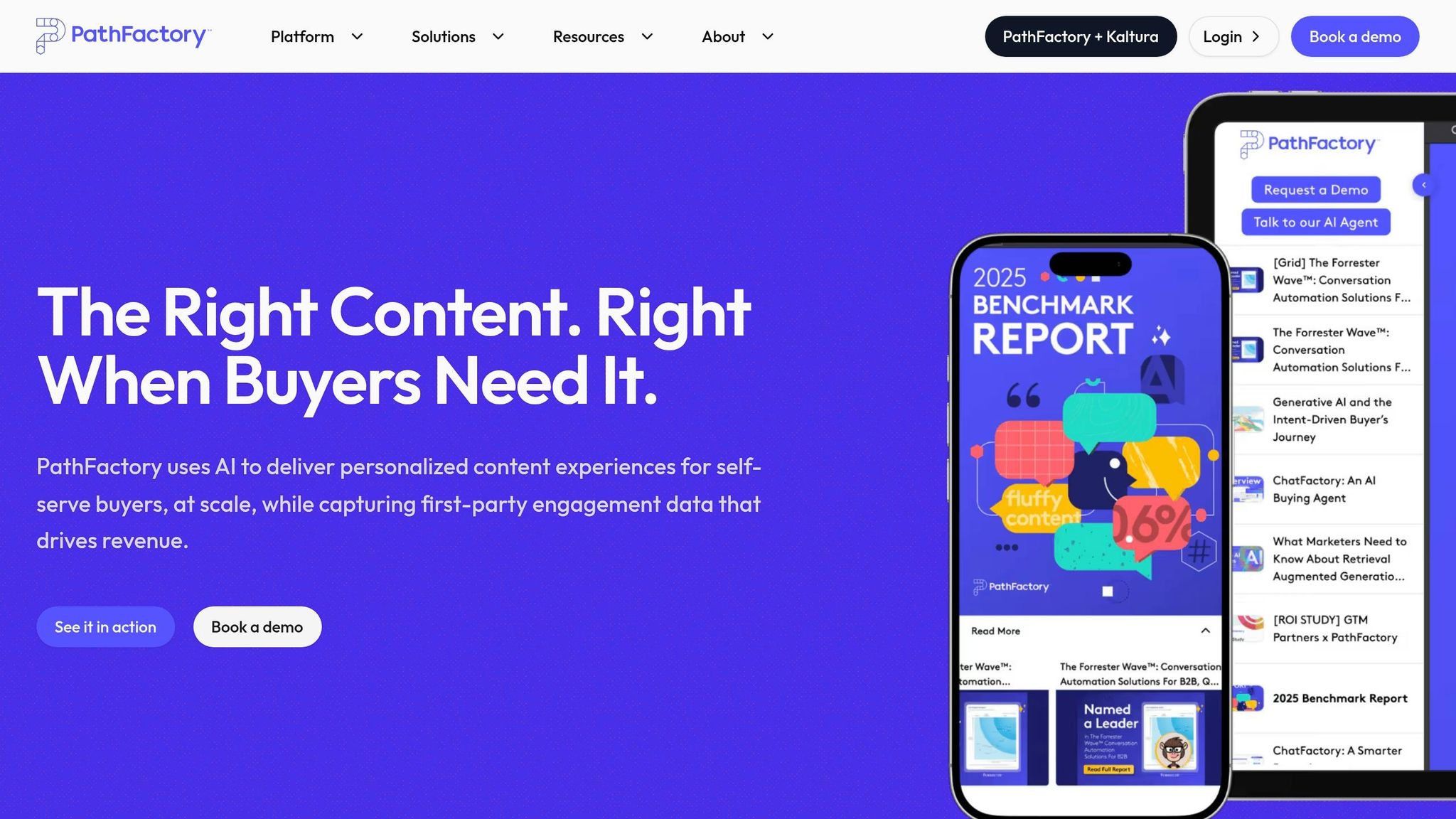
PathFactory focuses on creating personalized content journeys using real-time consumption data. By tracking individual visitor behavior and content interactions, it automates tailored content recommendations without relying on broad demographic data. This approach is designed to guide users through the funnel more efficiently.
The platform claims to help educate and convert audiences over 2x faster compared to traditional methods. It integrates seamlessly with existing Content Management Systems, offering personalized experiences without requiring major adjustments. Joseph Puthussery, Former Vice President of Global Digital Marketing at Cisco, praised its capabilities:
"What I love about Website Tools is that it intelligently determines the very best, most relevant content and recommends it for every individual user. It is a dream come true for digital marketing, as it automates a lot of what we are trying to accomplish every day."
PathFactory has also expanded its capabilities by acquiring Uberflip, enhancing its AI-driven content recommendation features.
Uberflip
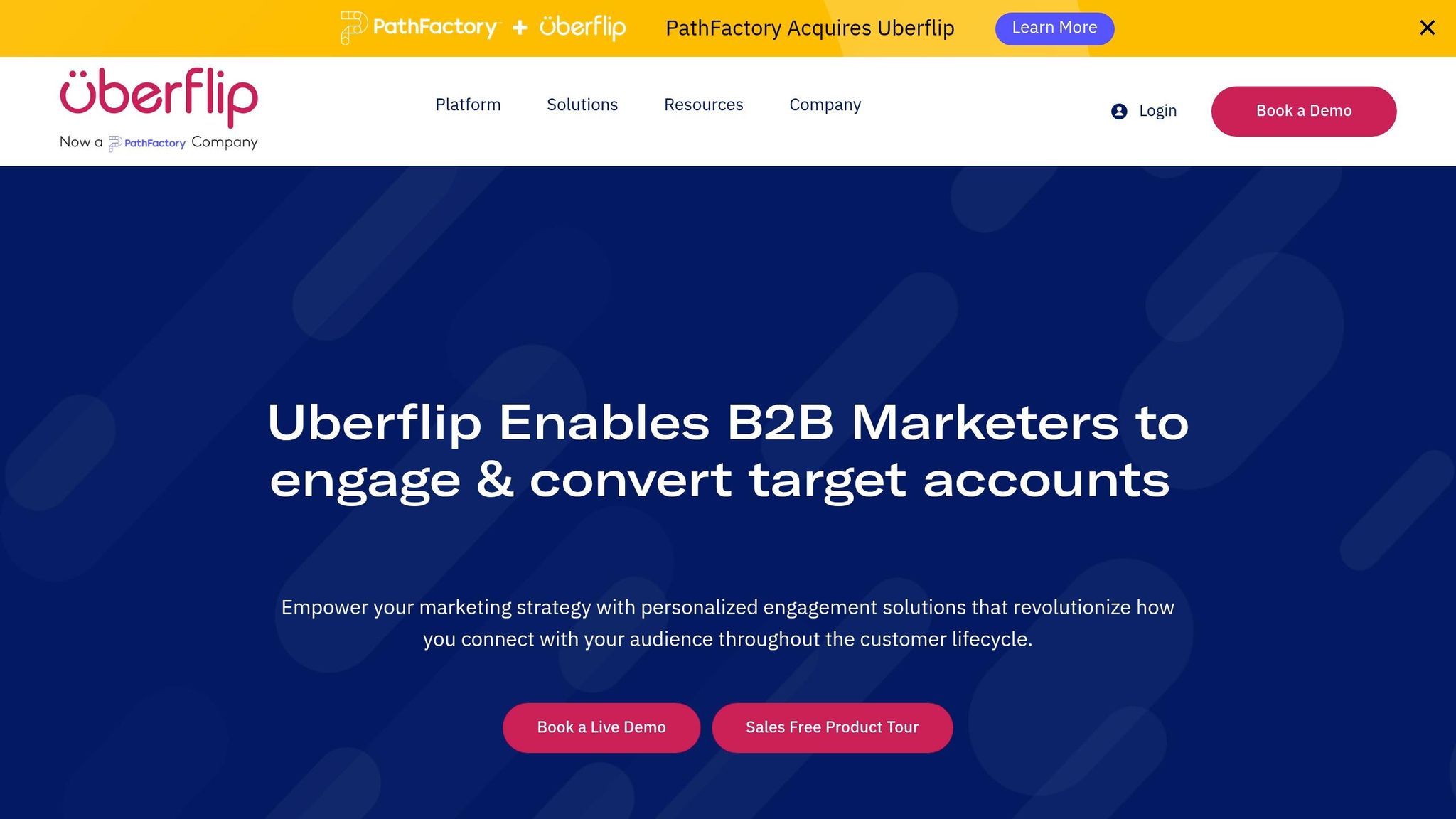
Uberflip, now part of PathFactory, specializes in creating "Content Experiences" that recommend assets based on visitor actions. A standout feature is the Site Engager tool, which uses AI to suggest relevant content through promo tiles or when a visitor exhibits exit intent. This platform is especially useful for content marketers looking for straightforward, customizable personalization options.
For those seeking a managed machine learning solution, Amazon Personalize offers a different approach.
Amazon Personalize
Amazon Personalize is a fully managed machine learning service that simplifies the recommendation process. It handles everything from data processing to model hosting, adapting recommendations in real time. The platform also integrates with Amazon Bedrock, enabling the use of generative AI for content variations and enhanced customer segmentation .
Amazon Personalize operates on a pay-as-you-go model with no upfront costs. It ensures data security by encrypting all information and allowing customers to manage encryption keys via their own Key Management Service (KMS).
Several companies have reported notable results with this platform:
- Lotte Mart saw a 1.7x increase in new product purchases.
- Bundesliga experienced a 17% boost in customer session duration.
- Calm achieved a 3.4% rise in daily app usage.
Apache PredictionIO
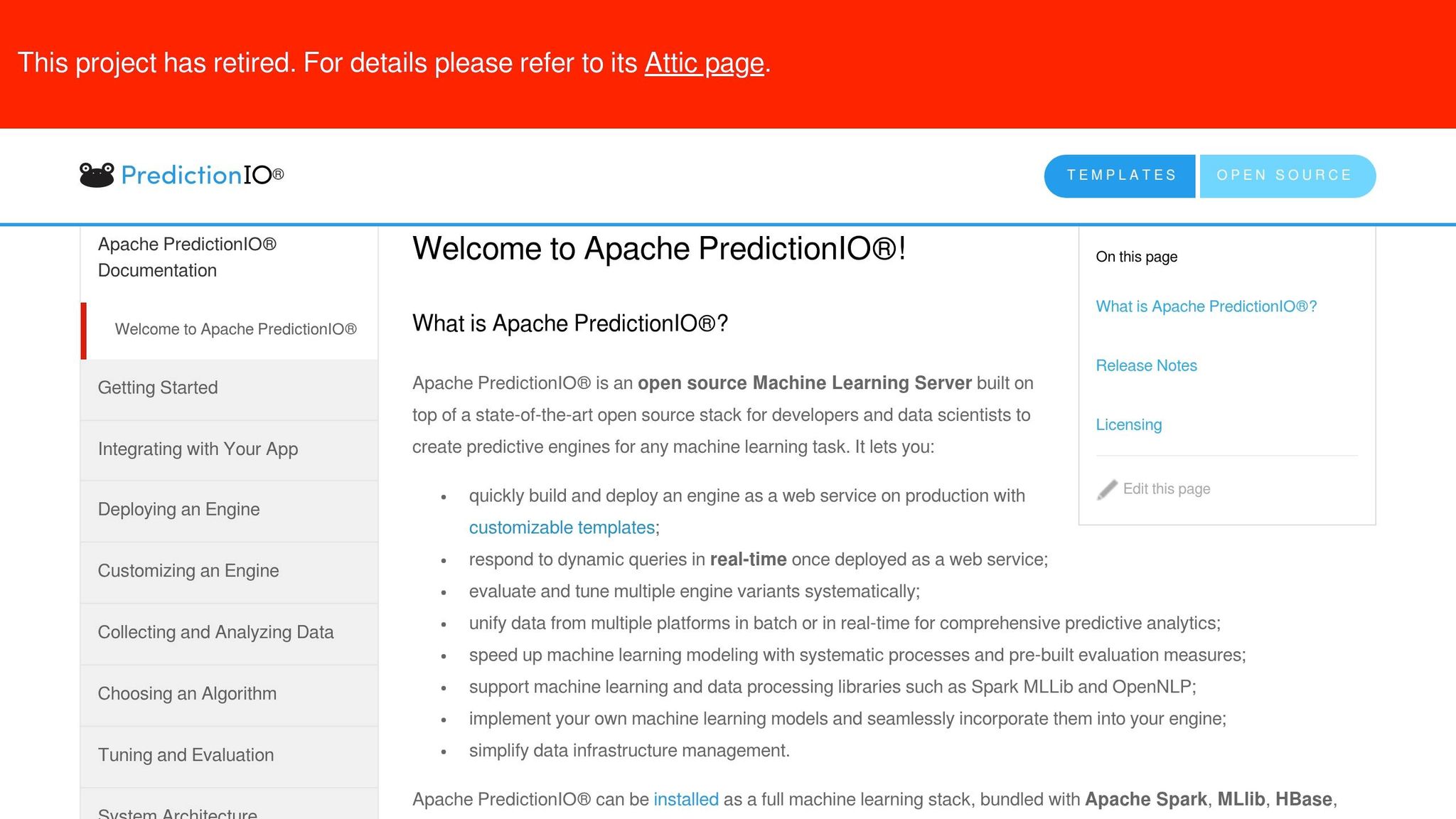
Apache PredictionIO is an open-source framework designed for developers and data scientists who want complete control over their recommendation algorithms. Built on Spark MLlib, it allows teams to create and deploy custom machine learning models using customizable engine templates. While it requires more technical expertise and setup, it provides unparalleled flexibility for tailoring algorithms.
TensorFlow Recommenders
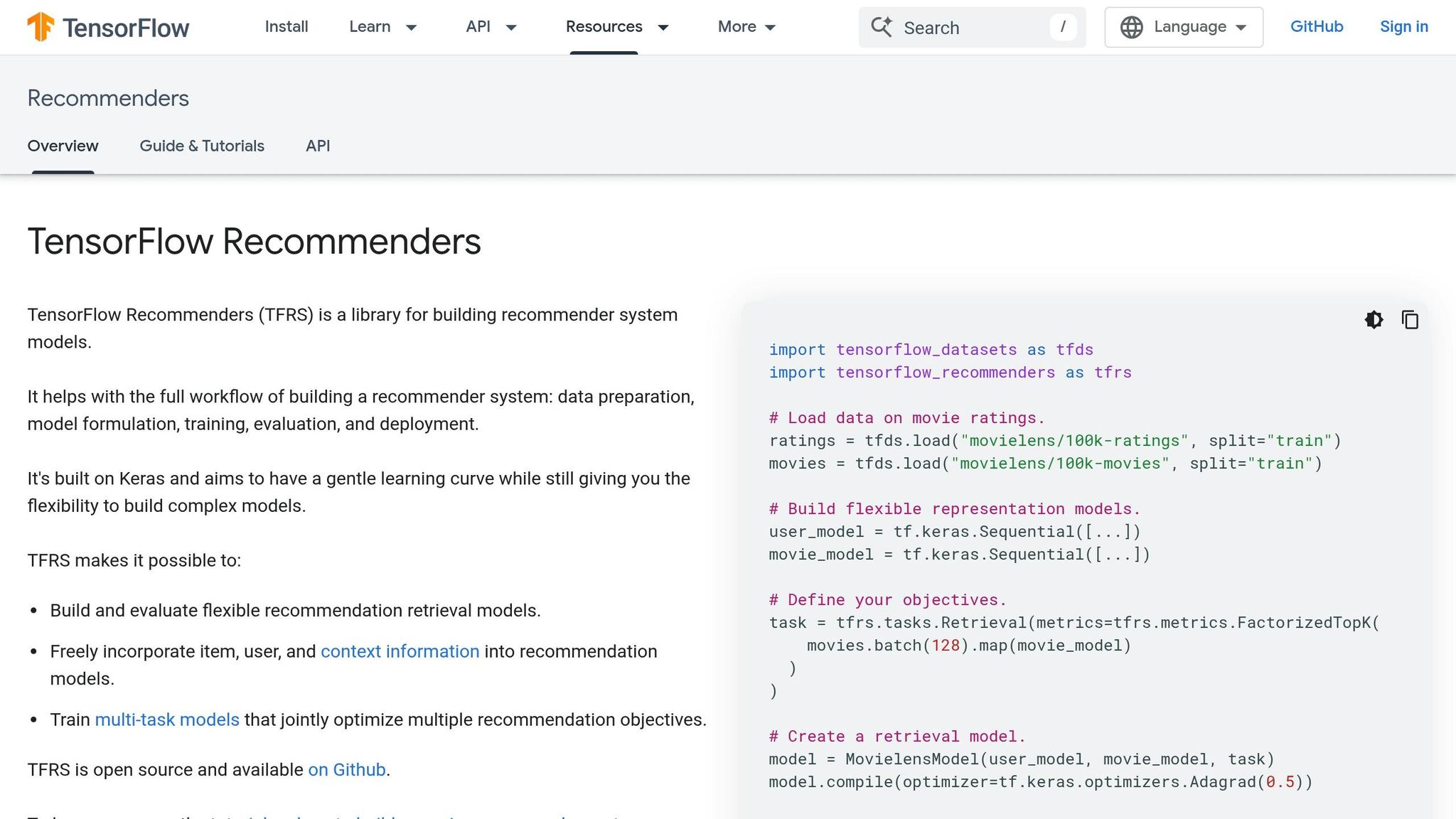
TensorFlow Recommenders is a deep learning library tailored for building advanced recommendation models. Part of the TensorFlow ecosystem, it excels at large-scale filtering and precise ranking, making it a strong choice for machine learning engineers working on complex, high-volume applications.
Platform Comparison
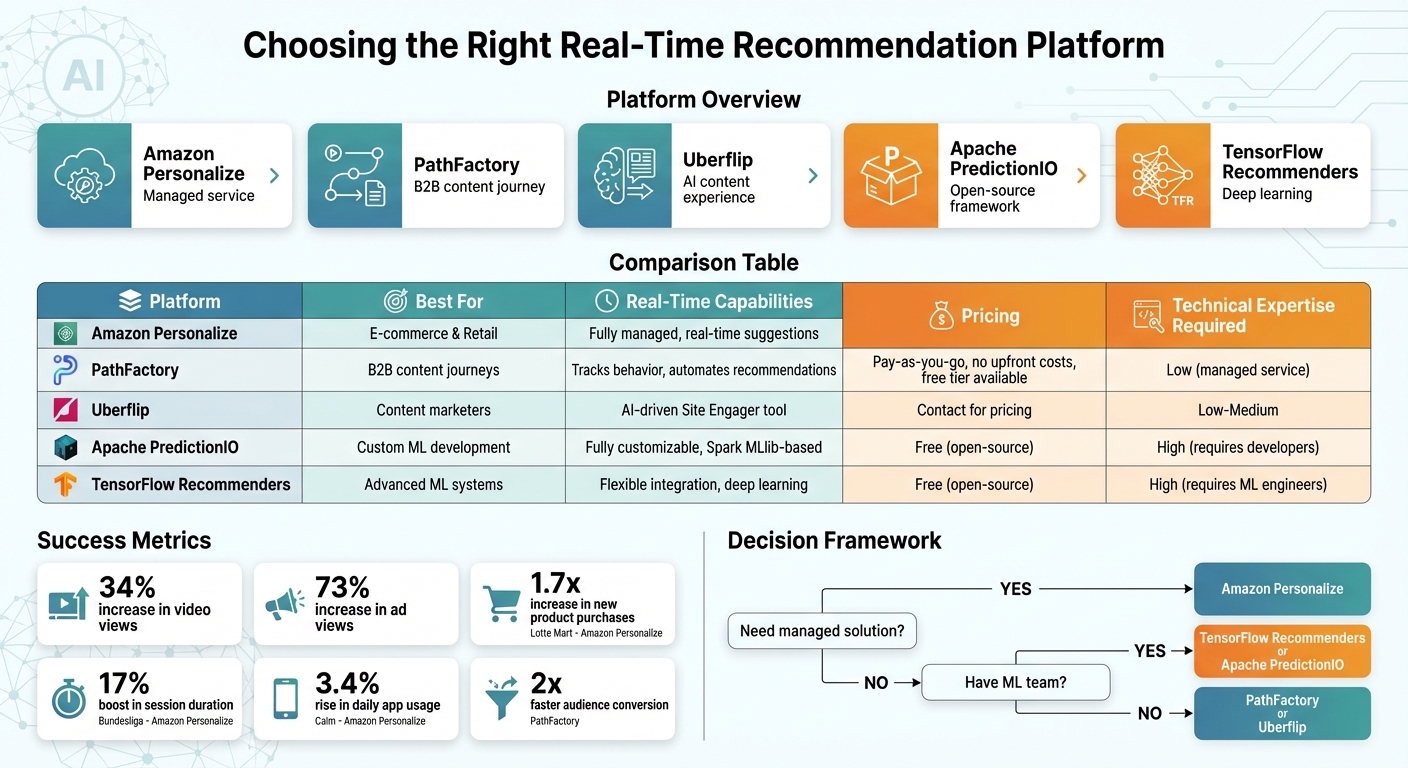
Real-Time Content Recommendation Platforms Comparison Guide
Selecting a real-time recommendation platform comes down to your specific goals, the expertise of your team, and how much you're willing to invest. The platforms listed here range from fully managed services that simplify setup to open-source frameworks that demand a more hands-on approach.
Comparison Table
| Platform | Best For | Real-Time Capabilities | Pricing |
|---|---|---|---|
| Amazon Personalize | E-commerce & Retail with managed ML needs | Managed, real-time suggestions | Free tier / Demo available |
| TensorFlow Recommenders | Custom ML development for specialized systems | Flexible real-time integration (infrastructure dependent) | Open-source (Free) |
This table highlights the main contrasts between managed and open-source platforms. Managed options like Amazon Personalize take care of infrastructure and model training for you, making them a great fit for teams that lack dedicated machine learning experts. Plus, many of these services offer demos, so you can explore their features without committing right away.
In contrast, open-source platforms like TensorFlow Recommenders offer unparalleled flexibility. They allow for complete customization, but they come with a steeper learning curve and are best for organizations equipped with skilled machine learning professionals who can design and maintain advanced algorithms.
Conclusion
The analysis above highlights how real-time recommendation technologies are reshaping engagement and revenue strategies for companies. Businesses using these solutions have reported measurable improvements, as these platforms excel at connecting the right content with the right audience at the perfect time.
Each platform reviewed offers a unique approach, tailored to different business goals and team capabilities. Whether you opt for a fully managed service that simplifies operations or an open-source framework that provides flexibility, the success lies in choosing a solution that aligns with your needs. These tools take over time-intensive tasks, such as reducing newsletter creation from one hour to just five minutes, or transforming manual content audits into seamless, AI-driven processes. This shift allows marketing teams to focus more on strategy and creative innovation.
For those looking to expand their toolset, Content and Marketing provides a curated directory of complementary resources. From AI-driven content ideation to social media management tools, this directory connects you with services that integrate smoothly with recommendation platforms, building a well-rounded content marketing ecosystem.
Today, content personalization has become a baseline expectation. Audiences demand timely, relevant recommendations across all digital interactions. The platforms discussed here empower businesses to meet these demands while improving both performance and operational efficiency.
FAQs
What data do I need to start real-time recommendations?
To make real-time recommendations work, you’ll need two main ingredients: user behavior data and content metadata. User behavior data includes things like clicks, views, searches, and interactions. On the other hand, content metadata involves details like embeddings and affinity scores. Together, these data points allow you to deliver personalized and dynamic recommendations tailored to each user.
How do I choose between a managed service and open-source tools?
When deciding between managed services and open-source tools for real-time content recommendations, it’s important to weigh your priorities.
- Managed services are great for teams that want a fast setup, minimal upkeep, and the ability to scale effortlessly. They’re especially useful if your team lacks deep technical expertise or resources.
- Open-source tools, on the other hand, give you more flexibility and control. However, they come with the trade-off of requiring substantial technical skills for both setup and ongoing maintenance.
Your decision should hinge on factors like your team’s technical capabilities, budget constraints, and whether you value customization over simplicity.
How can I measure ROI from real-time recommendations?
To figure out the ROI from real-time content recommendations, start by calculating the revenue these recommendations bring in and compare it to the total cost of the system. Keep an eye on important metrics like page views, session duration, engagement levels, and conversion rates. It’s also helpful to dive into behavioral data to see how users interact - look for signs like retention rates or repeat visits. By blending revenue-focused calculations with engagement data, you’ll get a clearer picture of how well the system is performing.